Spider-rama, or, the Chocolate Summer

The North Head

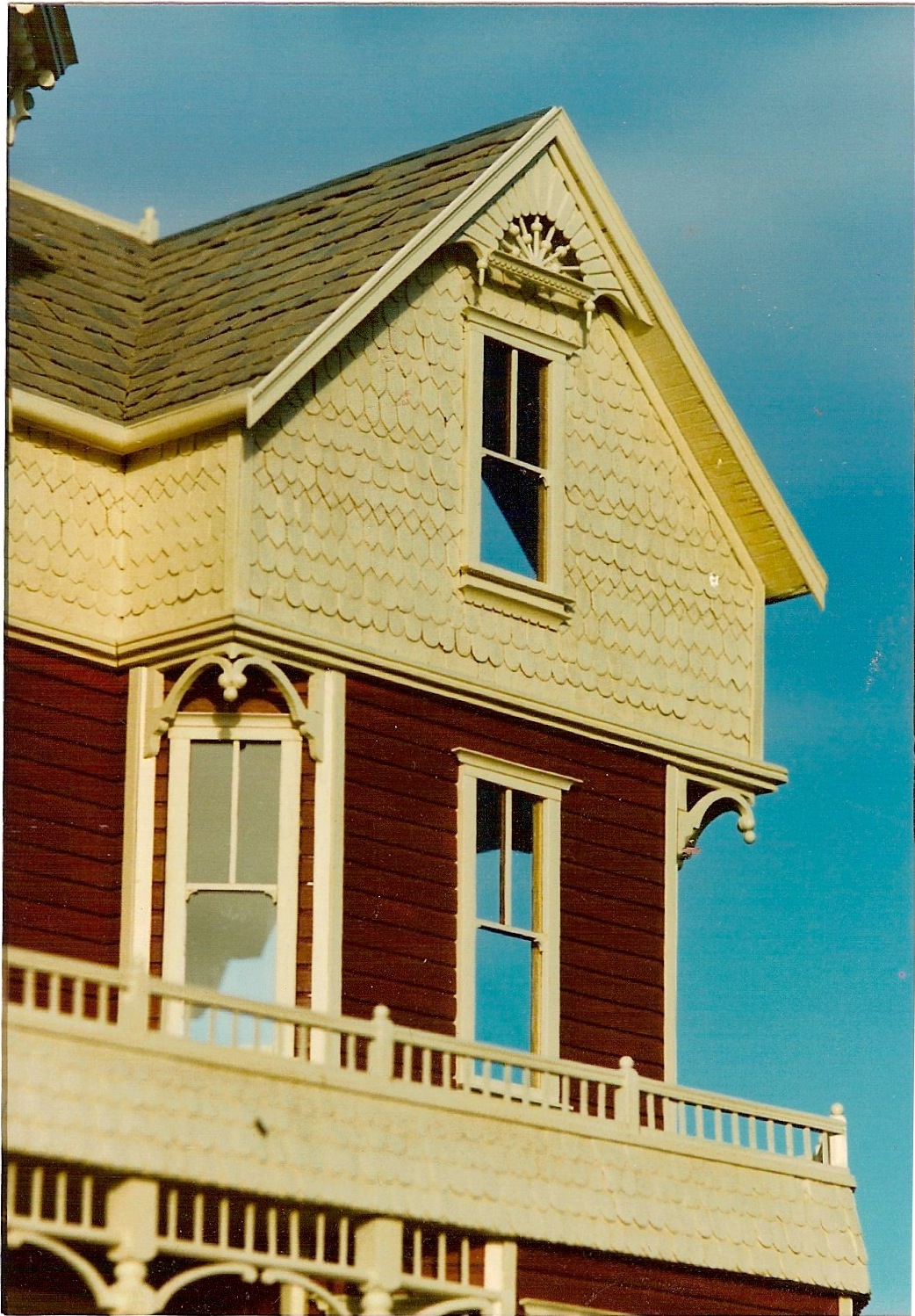
By June of 1977, with the start of The North Head, our 14th house, we were beginning to get down the vocabulary of Victorian. Noel came up with 3-point design of two gables with a tower between, plus a showcase chimney, that established the basic components for a handful of commissioned projects, as well as our Tower House kit for do-it-yourselfers. While Noel devised the intricate chimney brick pattern, I cut and applied endless rows of decorative and roofing shingles. The radio kept us entertained (and somewhat sane) with Jimmy Buffett’s Margaritaville (the ridiculous) and Hitchhiker’s Guide to the Galaxy (the sublime). That same month Seattle Slew won the Triple Crown, the Alaska Pipeline opened, and Apple II, the first practicable personal computer went on sale (as long as you had a TV for a screen and could run audio tapes).

Slightly aged diamond and fishscale shingles

The North Head was destined for Hawaii, and our enthusiastic client plied us with packets of chocolate macadamias and Kona coffee via the post office. We experimented more with aging details—breaking out some of the lattice under the house (where the dog went for shade), more wear and tear on steps and staircases, and a few more stains under the window ledges. While we were known for our aging techniques, it would be a while before customers would encourage us to do more. Noel developed his black wax formula for floors—Johnson’s paste wax mixed with cigarette ashes (yes, it smelled awful–eventually we replaced the ashes with Mars Black tube acrylic paint). It was applied after the floors were stained and laid, hand-rubbed in with a darker build-up left in the corners. It was one of those largely unnoticeable details that made a room feel real. It seemed to register in the sub-conscious of the viewer as evidence of human occupation. For us it took “the new” out. We added glass etching to our repertoire, which allowed us to embellish the houses even more—by then we were totally immersed in Victorian ornamentation. Jim Marcus introduced us to the wonderful gelutong, a dense wood, similar to basswood, but with almost no grain that allowed Noel to cut intricate gingerbread shapes on the scroll saw with minimal breakage. One of my favorite elements was the glassed-in back porch off the kitchen, very close to the sunporch on the front of our own house, where we ate dinner during the summer.

Back Porch

Late nights after we finished work, Noel often stayed up and just looked at the house, waiting for new ideas. One of those brainchilds came from noticing a hatch of baby spiders on our front porch, which he moved to the attic of the miniature house, then closed the door to the studio and came to bed. The next morning I opened the door to find the entire studio webbed–little white threads connecting the house to the ceiling, worktables, spare wood strips, tools and bottles of glue—everything linked to the next. And yes, the attic had tiny, in-scale webs strung across its ceiling.

Posted in Houses, Miniatures | Tagged , , , , , | 2 Comments

In Defense of Black Holes & Dirty Work Spaces

Studio Suitable for Framing

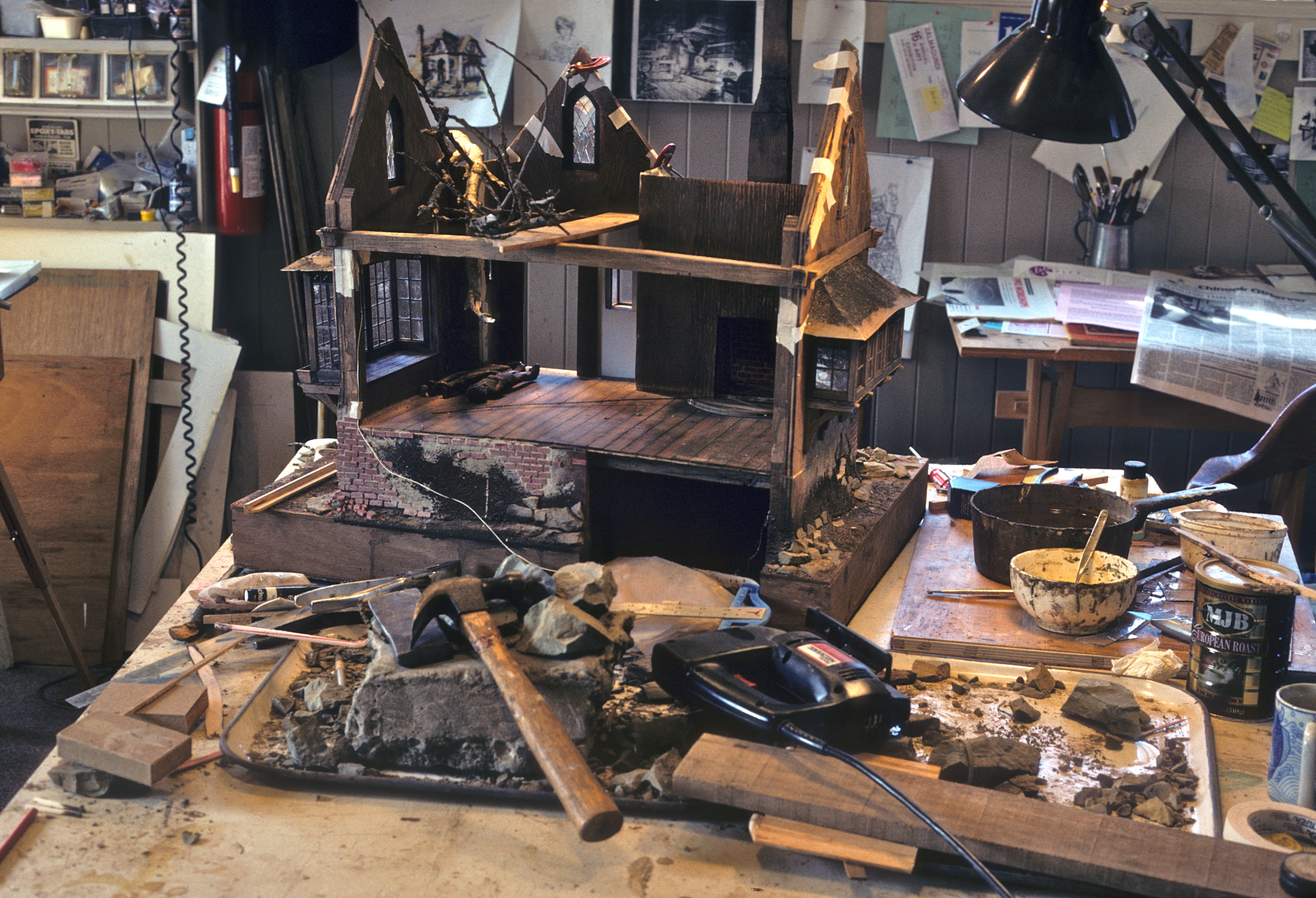
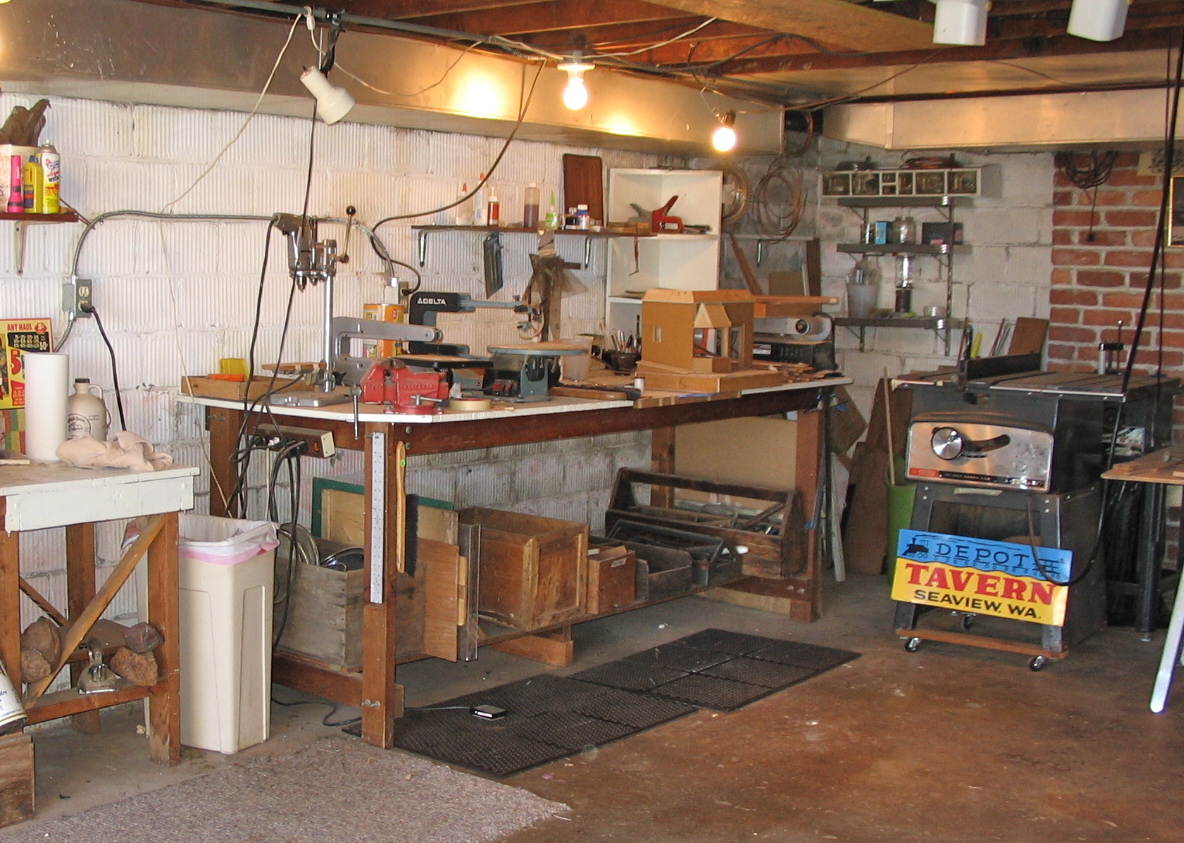
Our inner alarms went off a few years ago when we were asked to photograph our studio and workshop for a slide show comparing artisans’ work spaces for the IGMA annual Guild School gathering in Castine, ME. To say we work in the state of disarray required by creative types is to equivocate. In order not to look too bad to our customers and colleagues, we tidied up as best we could and sent off photos of somewhat orderly workspaces.

We’ve visited and seen photos of other people’s work spaces, and been stunned by the tidiness and organization—each tool hung in its allotted space, clutter-free work tables, shining table saws equipped with outdoor-venting fans. How wonderful it must feel to have a place to set one’s coffee cup in the morning! Our MO was to get up, beach walk the dog, eat, workworkwork, nap, workworkwork, eat, work, go to bed. We left the studio at night under piles of tools, stripwood, sawdust, messy glue bottles and paint. Mornings we searched the various black holes to find what we needed to get going again. Coffee cups and catalogs were often lost for months in the jumble.  Sometimes forever.

Constructing Faces of the Moon

Curiously, I took pains to keep our living spaces  fairly tidy, even though we mostly only walked through them. And that may be why we sometimes moved into the kitchen table to work when the studio was beyond the pale.

In order to keep the work moving, I tried to maintain a good supply of our most-used-and-valued tool, the Exacto #1 hobby knife, along with a gross of replacement blades. However, we could usually only find two at a time. If one of us left our trusty knife in the studio while going to move the laundry into the dryer, stoke the wood stove, or water the dog, the other (I won’t say who was the most regular culprit) was bound to absentmindedly pick it up (after searching for the one he/she just had in hand) and go to work with it. At one point I taped “Mine” labels to the handles of my knives, which only partially solved the problem…

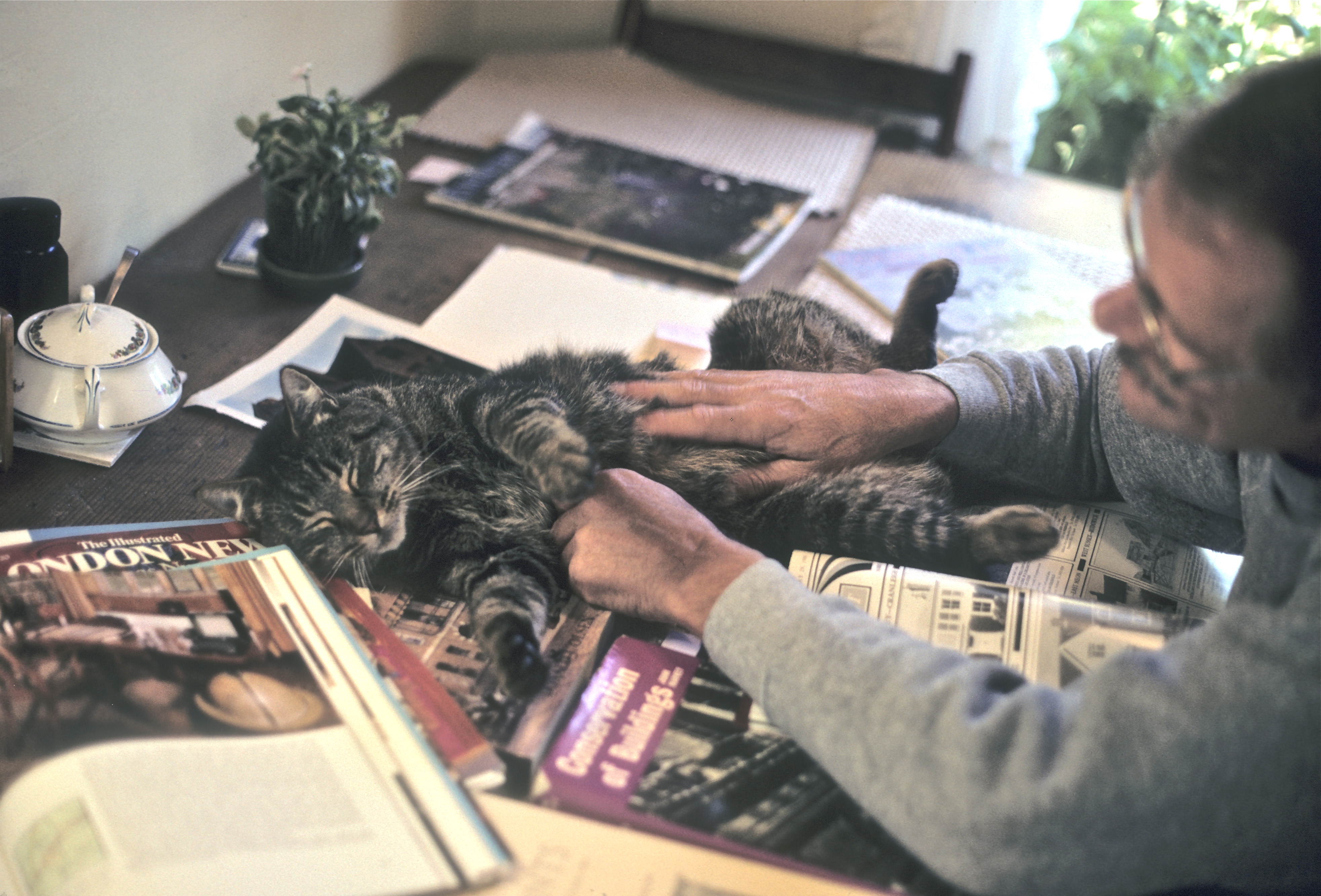
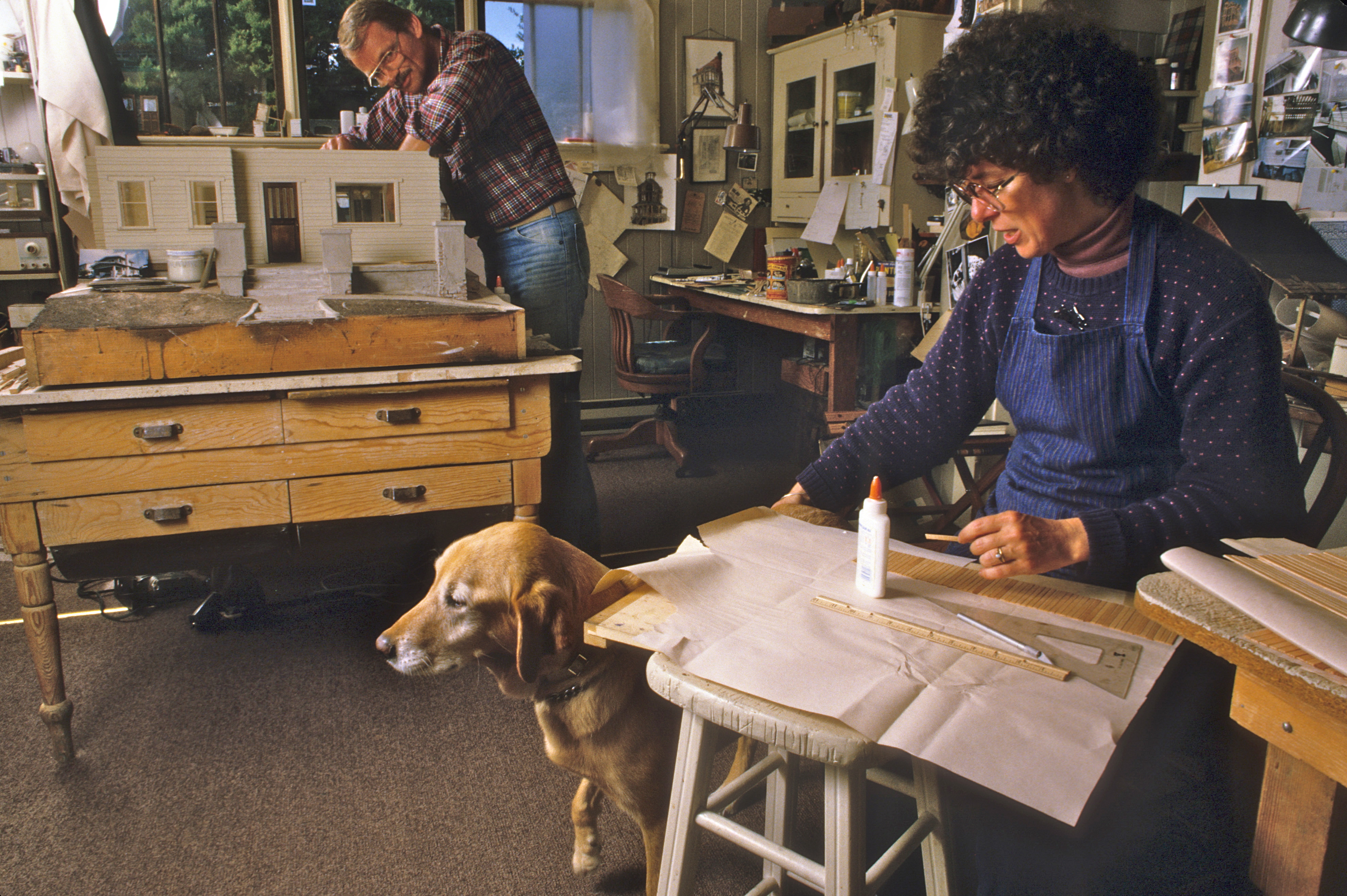
Dog Time in the Studio

We worked this way for as long as it took to build a house, which was sometimes years, as our work time on houses was punctuated by designing, building and preparing teaching projects. Once we were done with a project, and a house was delivered, we went to work on the chaos—clearing the work tables, scraping them down and repainting everything white. We even stripped the walls, which had become bulletin boards of drawings, photos and letters relating to the current project. What a pleasure it was to start again in clean, clear surroundings, but my resolutions to keep it that way never lasted. We were destined to be messy, and from the mess to produce our aged and dirty houses.

Posted in Houses, Miniatures | Tagged , , , , | 3 Comments

The Magic of Electricity

The Rainier House, 1977

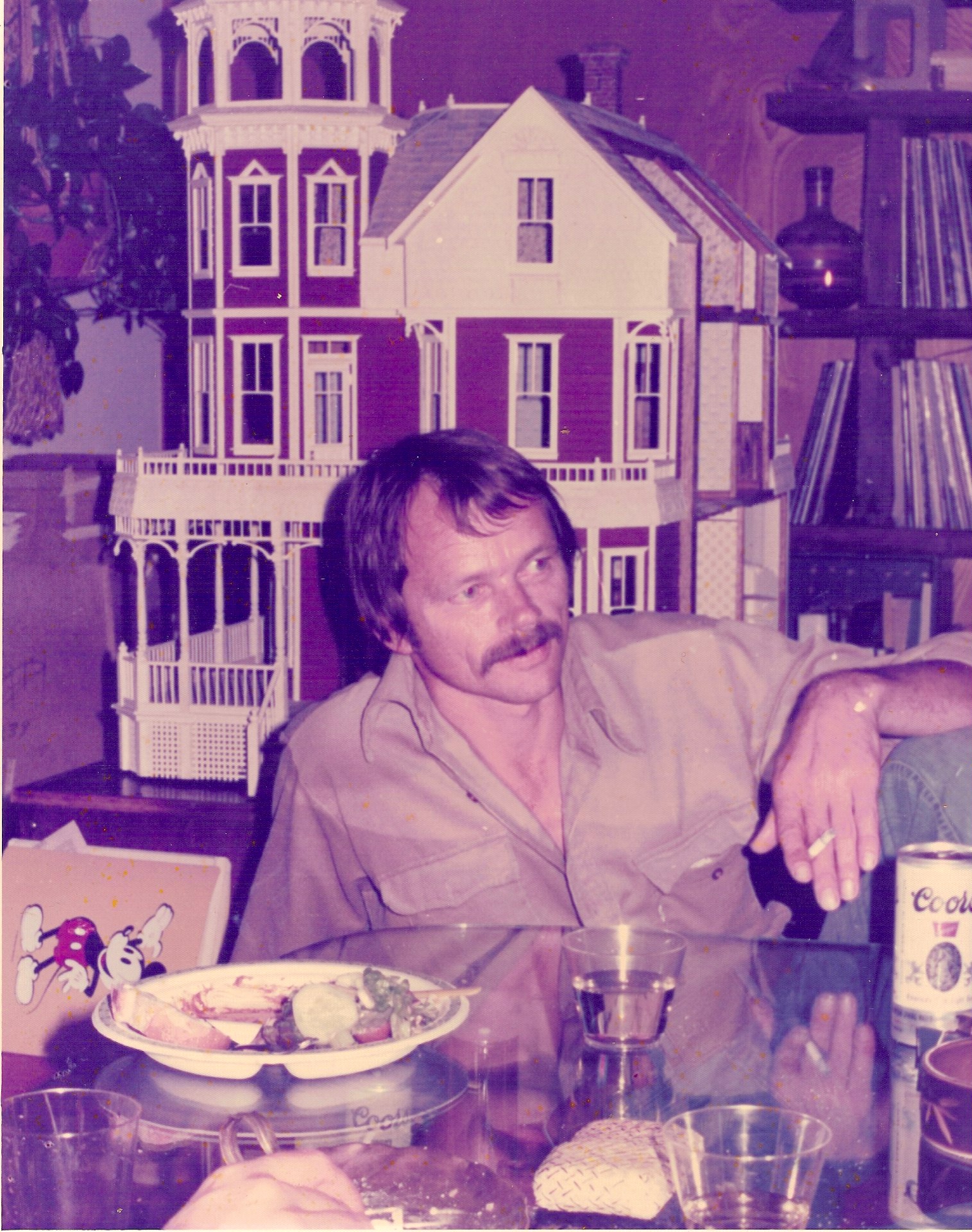
Between November 1977 and Nov 1978 we would produce three more houses, this time on commission. When we returned from the NAME show in early November we had two years worth of orders, but only a little money, so we went to the bank to take out our first loan. Naïve as I was, I was thrilled that they were so willing to loan me the $1000.00 it would take to get us through to our customer’s next payment. Biding time at the loan desk we stared at a poster for home improvement loans, featuring an unusual Victorian house with twin towers and a third floor center cupola. Our little lightbulbs flashed on, as simultaneously we decided that house would be our next mini production. The ad campaign was over, so the bank gave us the poster (you can see it in on the wall behind Noel wiring the house in our studio in the photo below). Months later we would discover the photo was a concoction of the advertising agency—the original house had one tower and a cupola, and the art director made a mirror image of the one side, flipped it, et voila! a house with twin towers.

Wiring Diagram

As you can see, wiring a dollhouse requires a lot of ingenuity, especially if you are of the school of thinking that believes electricity is basically magic, a theory we proved again and again over our years of wiring mini-houses. We didn’t bury the wiring in the walls, as we decided electricity wouldn’t have been built into these houses, but added later. That allowed us to run wiring from each light fixture across the ceilings, snake it down the corner walls under u channel basswood strips (substituting for metal electrical conduit), and, eventually down to the power supply—bell transformers in our early houses—in a drawer at the base of the house. In a house as large as the Rainier, this became a major puzzle. As a rule, we tested each light fixture before and after installation, then went on to the next. Eventually clumps of wires from 2-3 rooms would be braided together, attached to smaller wires , then squeezed through a hole drilled in the bottom of the house. All that spaghetti was eventually woven into two bundles of wires that wrapped around the neg and pos screws on the bell transformer. Volts and amps were never a part of the equation—if we had too many wires, we added another bell transformer.

To test the final outcome we would wait until dark, wire the transformers onto household electrical cord and plug it into the wall. More often than not, the electricity gods were kind to us, and all the lights went on. Sometimes not, as with the Rainier. Noel then spent days tracking back, tinkering with mini lightbulbs, re-braiding different clumps together, and changing transformers until we had lights that would stay on reliably. Other times we just unplugged, went to bed and tried again in the morning to find everything shining as it should. Our mini friends are not doubt howling with laughter and/or horror that we could be so blase about electricity, but neither of us seems to have a single ion of electrical thinking in our brains. The houses were what was fun.

Rainier: View through dining room into living room.

Once all the lights were working, we called the client to arrange for a delivery date. The buyer indicated on the phone that there might be a problem getting it into her house, but that she’d “arrange for maybe a crane, or something.” Sure enough, it wasn’t going through the narrow entryway, so we drove around back and parked at the bottom of an ivy-covered hill below her patio door. She had some burly men on hand, and together we negotiated it up through the ivy (all the while I’m thinking snakes live in ivy), over her railing and in through the door, but then where? The only space large enough was her coffee table in the center of the living room, surrounded at fairly close range by a couch and a couple of chairs, and that’s where she wanted it. The house, at close to 5 ft. tall, 30 in. w X 4ft. l, ate all the space in the room. We sat down and had some iced tea, bumping our knees on the house as we tried talking around it. The customer was thrilled, and allowed as how her friends and family wouldn’t be much fun if they couldn’t enjoy the house when they came calling.

Posted in Houses, Miniatures | Tagged , , , , , , , | 2 Comments

It’s Showtime!

Miniature shows are a whole world unto themselves, at times circus-like. Sometimes they’re the miniaturist’s version of a rock concert–imagine 11 yr. olds lining up for a chance to see Justin Beiber, and you get the picture. There may be an age difference, but it doesn’t dim the enthusiasm of collectors waiting to see what their favorite craftspeople and artisans are up to. The tension before the opening of the sales room doors is usually heightened by auctions  for first and second place in line, conducted at the preceding dinner. Everyone thinks they’ll be cool about it, but when the group excitement builds, it’s infectious. The pros know to be there early, and have their money ready. Once I saw a woman with $50.00 bills folded down to ring size and woven around her fingers. Some people, who know their craftspeople, slap down their card and a $100.00 bill, tell you what they want and say, “I’ll be back!” as they head for their next favorite table. The true collectors come equipped with tiny magnifiers to look for dovetails, solder joints and other signs of fine craftsmanship. They keep us on our toes.

The Lineup

For the community of craftspeople there is another kind of tension building up in the calm before opening—is my table in a good place (i.e. easily visible from the entrance)? Will I sell anything? How do I stack up with the others? During set-up we would all visit around, making small talk and appearing calm, as if we hadn’t been preparing for this few hours for the previous 6 or so months. For Noel and me, just moving the houses from the van to the salesroom was physically exhausting, but once the elephant was in place, we didn’t have much to do but wait. And wonder. Then there was the initial rush of customers, followed by the dry spell as they dispersed around the room. If that went on for too long, or the table next to you had a crowd while you had no one, those old teenage fears of not being picked for the team arose. Curious, how we never get over that.

The one time we shipped a house to a big show the hotel lost it.  Not a clue. There we were, in New York, late at night, having flown across country, frantically searching every closet and storage area of this huge hotel for a fragile, paid for, one-of-a-kind dollhouse the size of  a bureau. The hotel event coordinators, in true New York fashion (being a native Manhattanite, I can say this) steered clear of any responsibility. It was the next morning before we found it in a utility room, thanks to one of the janitorial staff who had been asked to stash it, and remembered where.

In the years when there were miniature shows almost every weekend, somewhere, there was a corps of sellers who traveled from show to show, like gypsies. They often took up residence in campers or motor homes, working nights to fill in their stock. They booked sales tables close to one another so they could visit, as well as spell each other during breaks. What I admired most about these people was their ability to set up dozens, or hundreds, of tiny figurines, butter dishes, doll hats, trims, or metal findings in ordered and tiered displays in the time allotted, all pulled out of tiny boxes lined with tissue paper, and then reverse the whole process in the dreaded 45 minutes we usually had to repack and get out at the end of the show. The audience left, the lights dimmed, and off we went our separate ways. Until the next time.

Posted in Miniatures | Tagged , , | Leave a comment

What Happens in Las Vegas

On the way to the show

We celebrated the completion of The Seaview with a party at home, and the next morning packed it into the trusty camper for the trip to California. I can’t remember if it was Santa Rosa, Santa Monica, or Anaheim, but we were off to the NAME Regional Houseparty (aka a miniatures show), where we hoped to find an audience receptive to our work. The logistics of moving a 3-story house weighing around 60 lbs., and measuring 29”w X 40”l X 57”h was part of the voyage. Family and friends all wanted to see what we had made, so the trip included a stop in Goleta, CA to see Noel’s sister and family, and another night in LA where friends held a party for us and the house. Both stops entailed moving the house out of the camper, through doors of varying heights and widths, and back again the next morning. I was more than happy to see it safely settled on the sales room table. A friend at the party had encouraged us to double our price (we were thinking $2000.00), but $4000.00 seemed an outrageous price for a dollhouse, (we still hadn’t quite accepted the concept of miniatures as art), even if it had taken us three months of intense labor. As the doors to the sales room opened, collectors poured in. A mob! Noel said, “Let’s do it–$4000.00.”  I panicked—what if it didn’t sell? People flocked to see our house, an unexpected occurrence, so we stationed ourselves at either end of the table to answer questions. At the lunch break we excitedly compared notes—someone wanted the house! Yes! A woman, middle-aged, blondish, we had each talked to her. She would return after lunch to confirm the sale. Noel was busy when the buyer returned, so she and I dealt with payment, and discussed our delivering it to her home in Las Vegas. While we were talking I caught Noel’s eye and signaled him over. It was noisy. I pointed to the customer, showed him the down payment check and told him she would pay us the balance in Las Vegas. I thought it odd it took so long for the good news to sink in. He said, “That’s not the buyer I spoke to.”

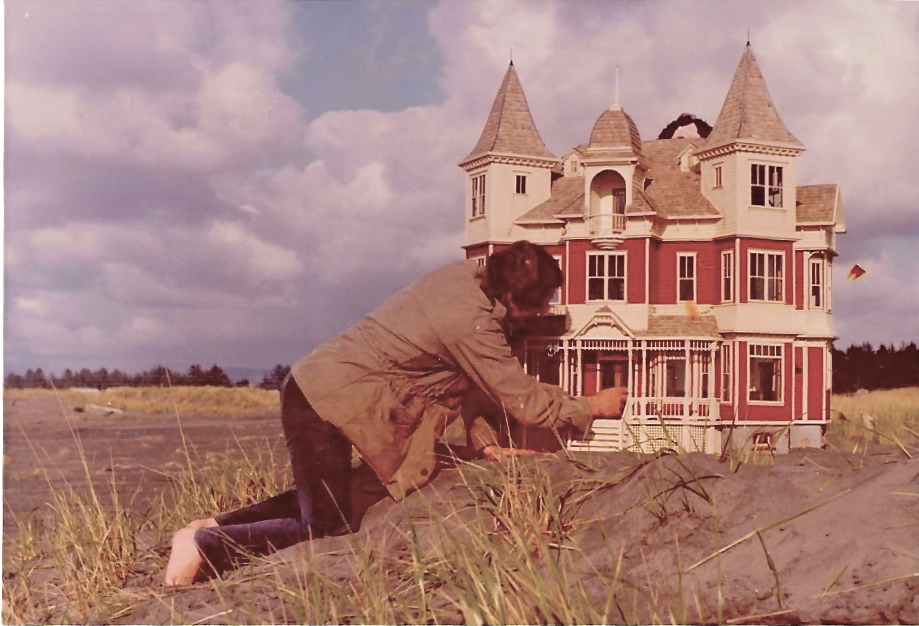
The Seaview on the beach

Indeed, two different women were vying for the house. As “mine” was there first with the money, it was hers. Number 2 was understanding, if disappointed, and gave us a sizable down payment for our next house.  She would also become one of our most loyal and supportive clients. She would also buy the Seaview from its original owner. At the end of the show, with orders for 4 more houses tucked in our pockets, we packed the Seaview back in the camper and headed for Las Vegas. The old Las Vegas.

The customer’s husband was the maitre d’ of a big casino. The lived in the first house I ever saw with double everything in the bathroom, including toilets and bidets, all housed in mirrors and lot of black and gold marble. It was curious and a little wacky seeing so many images of oneself while sitting there, gawking. They treated us like celebrities, and took us out to one of the finest restaurants in town. It was impossible not to notice the near reverence our host was accorded at every stop–everyone knew him. They paid us in cash, plus extra for gas, food and motel–more money than either of us had ever held at one time—extracting a promise from us that if we went out to a casino we were not to take more than $10.00. After they dropped us at our motel, we headed out to cruise Caesar’s Palace, where it took approximately 7 ½ minute to lose the whole $10.00. For the life of me I can’t remember where I stashed the rest (somewhere ingenious, as I imagined someone would figure out we had $$$ and hold us up at gunpoint). I do know I laid awake most of the night in that funky little motel, amazed at where we were, and why, and what had happened over the previous week.

In the morning we drove our cash stash to the nearest bank to convert it into travelers’ checks. There was a line, which gave us the opportunity to observe, first hand, the denizens of a city that never sleeps–the cleaning people heading home with their paychecks, the formally dressed, night-grizzled winners and losers, and the in-betweens, looking desperate for what little cash they had left. It’s always night time in the casinos, and the daylight wasn’t kind to those stepping out.

Posted in Miniatures | Tagged , , , , , | Leave a comment

Bringing in the Necessary

Seaview Bathroom

It was the details we loved, the furnishings and fine-tunings of the individual houses. The bathroom was one of the great rooms for exploration of style—from the get go, people chose their appliances to show off their wealth and sophistication. When the outhouse (or Necessary, as it was known by those refined and euphemistic Victorians) was moved inside, it was an evolutionary process, open for interpretation, an approach we took as an open invitation to riff on.

For the Seaview, we chose the relatively upscale detail of enclosing the tub in wood paneling that matched the wainscot trim around the walls.  It also solved the problem of how to hide the craggy bottom of the tub Noel and a potter friend had slipcast from porcelain (Chrysnbon had yet to come out with their matchless, in-scale claw-foot plastic tubs, which we would learn to modify with paint so they looked more like porcelain).

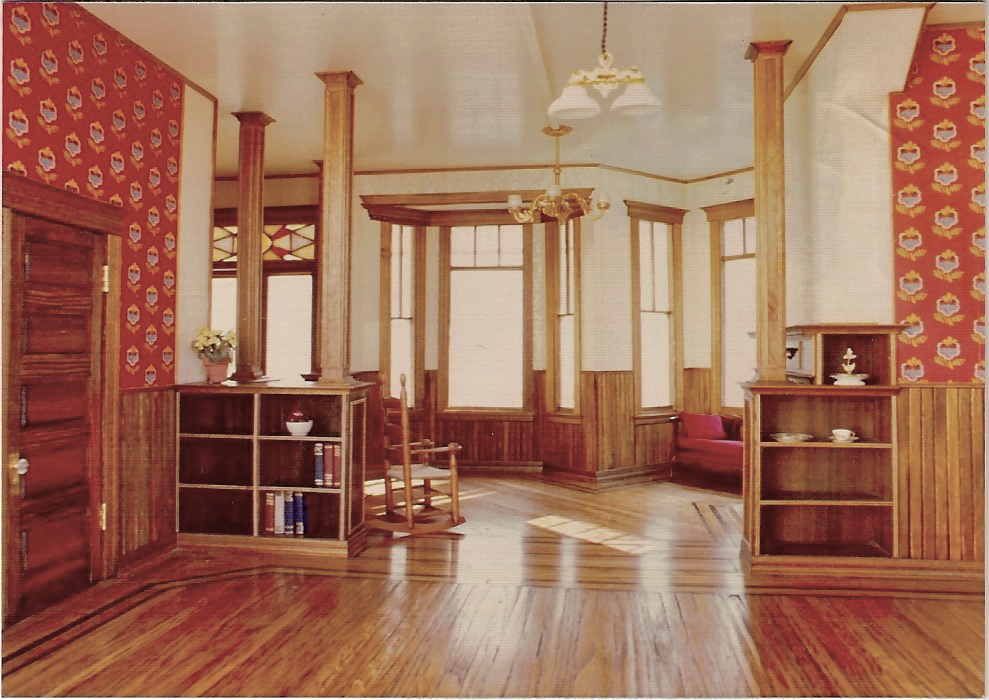
The wainscot we made from ¼” fir strips beveled on both sides on the Dremel scroll saw/sander (a days’-long, tedious process that still makes my back and ears ache to think of—but, hey, we were young!). We then glued and butted the strips together on sheets of newspaper, sanded, stained, steel-wooled and stained again until we got the color we liked. I cut the finished, laid-up strips into sections the height of a chair rail, glued them to the walls with Elmer’s, and capped them with similarly finished basswood chair railing. Noel was still proudly cutting our baseboards from fir, though that would change, once we discovered the time-saving wonders of Northeastern mouldings.  Above the wainscoting the walls are papered in a textured, off-white paper with a decorative border around the top. The floors are the same stained oak as the rest of the second story.

(Side-lining a moment–in an early interview we were quoted as saying Noel milled all our moldings, which was true until we discovered Northeastern, but the quote was printed, and stuck, and to this day we are trying to undo that mis-perception).

The overall effect of the Seaview’s bathroom was, unsurprisingly, very close to the bathroom we had refinished in our own Seaview house, though the wainscot in the full-size version Noel made from plaster lath. And, in the case of our house, we got to have the porcelain clawfoot tub—a relic resurrected from its bucolic second life in a pasture as a livestock water trough. The tub was on the shortish side (to fit our tiny bathroom, carved out of the one-time back porch), so that when you slid down in for a soak, your feet were comfortably propped at the perfect angle for relaxing and forgetting all those hours at the sander.

Posted in Miniatures | Tagged , | Leave a comment

Looking for a Farmhouse

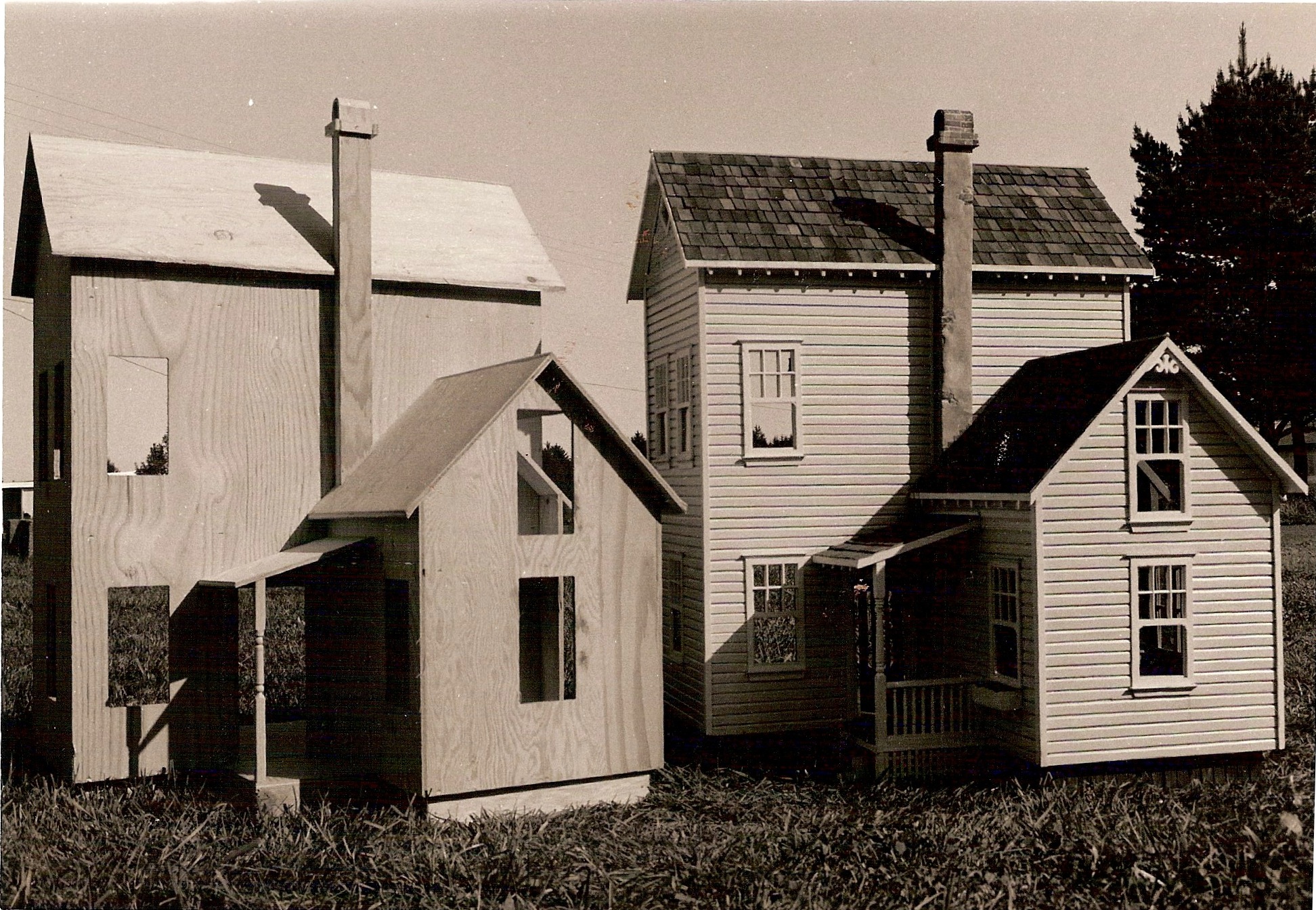
The Eden Valley, prototype for our first kit, The Farmhouse, 1976

A quick post to say someone is looking to buy one of our Farmhouse kits. If you have one you’d like to sell, send me an email and I’ll put you in touch with the buyer.

Posted in Miniatures | 1 Comment

Blackberry Wine & Elmer’s

Seaview Shingles

The summer of 1976 we ran like hamsters on the Seaview-to-October-Miniatures-Show wheel (mini-historians: was the NAME California regional show that year in San Diego? Santa Rosa?). A 6-pack of Coors cost $1.36, a price Noel groused about so much my mother sent him a shirt cardboard with 136 pennies taped to it. We never let on exactly how much we needed even that amount. If we wanted wine, we sipped the barely palatable peach or blackberry concoctions Noel and a neighbor brewed next door.

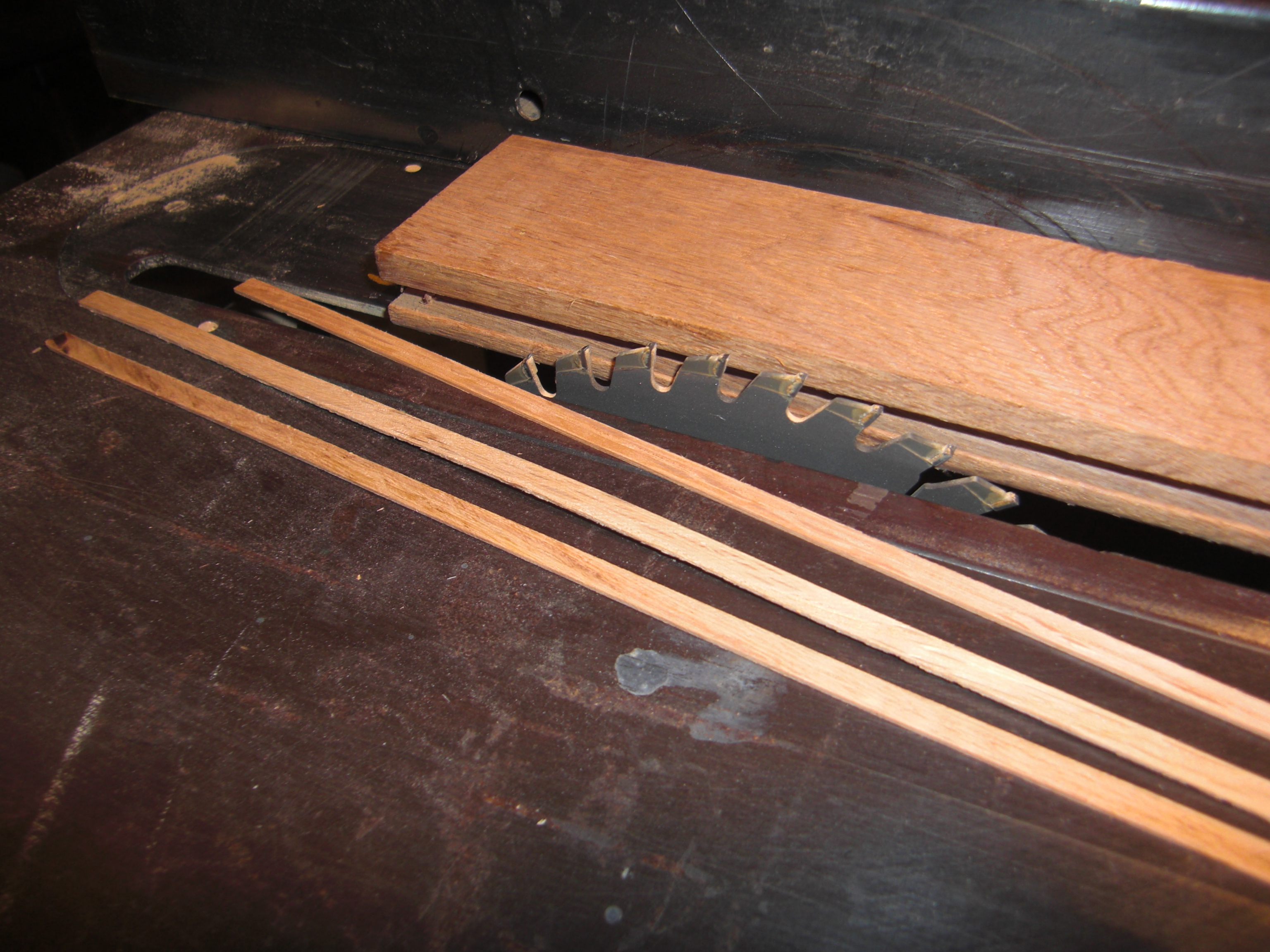
Our aim was always to make our houses look and feel old and lived in–houses with age lines that told stories reflecting their years, rather than old-time houses just built. For the Seaview’s porch decks we cut planks from naturally weathered scavenged (from a field on the back road) de-laminated plywood. Noel milled mini-floorboards from the short ends of full-size oak flooring on the 10″ table saw we brought from Calif. It took only one trip through the ER, and a permanently creased thumb, to convince him to respect its powers.

The Blade

The oak came from the back of the lumber yard–boxes of it no one else wanted, all for $10.00–enough to make our full-size kitchen counters, and to floor all our mini-houses up to the present. There’s still a stack in the basement to pass along. The more formal ground floor rooms were oak, inlaid with cherry banding, and the third floor was straight-grained fir like the floors in our full-size beach house.

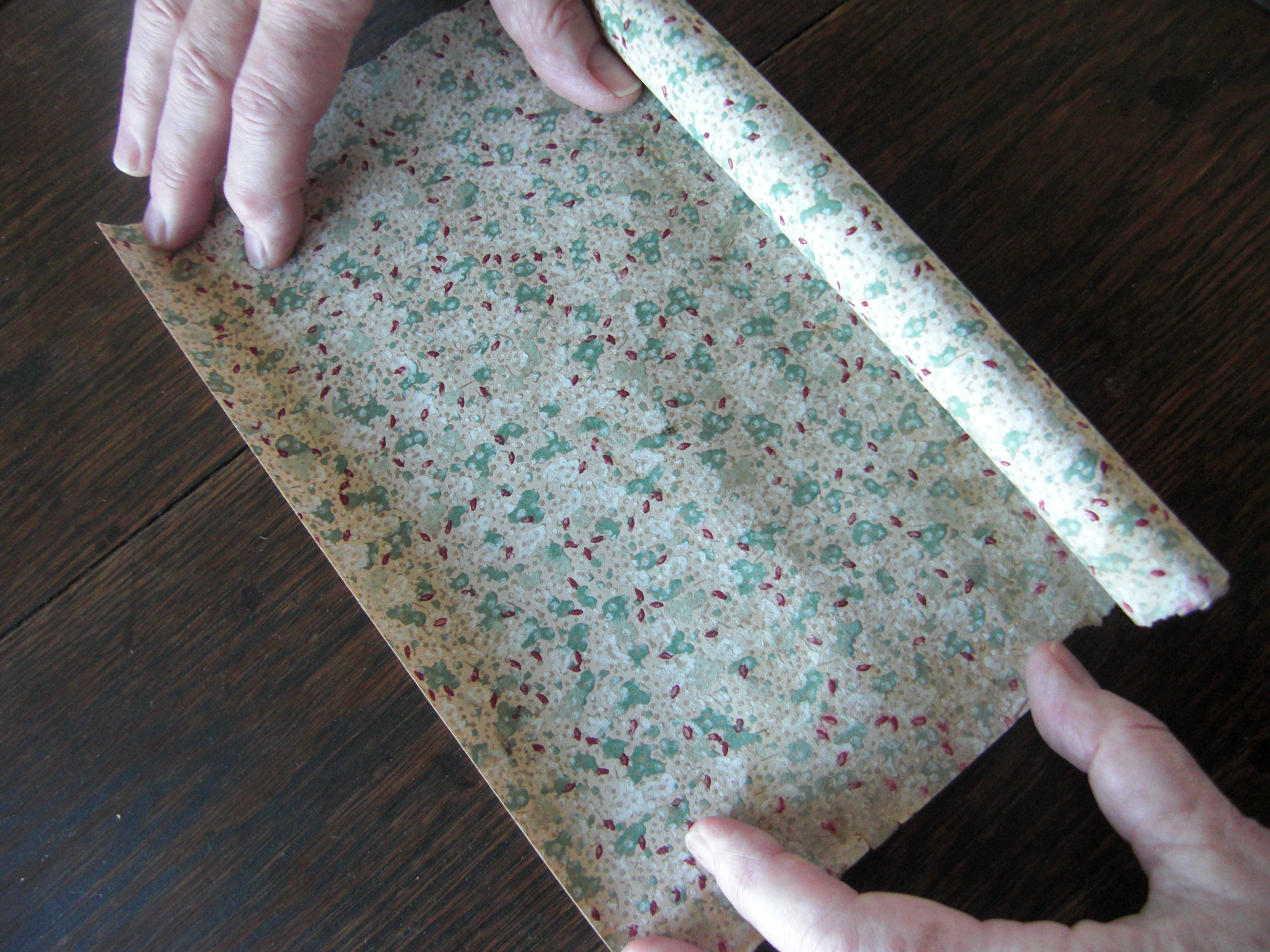
old, clay-based wallpaper

For the Seaview’s walls, I cut wallpaper in strips from a few discovered rolls of old, water-based clay-printed full-size papers, along with patterns cut down from discarded wallpaper sample books. We hadn’t yet discovered the real cache of 1930’s clay-printed papers we would find in the back of an art supply store in Astoria. The background had yellowed, and the designs were printed in clay, which gave them a slightly dimensional feel. It even smelled old. All on their own, the papers evoked another time.

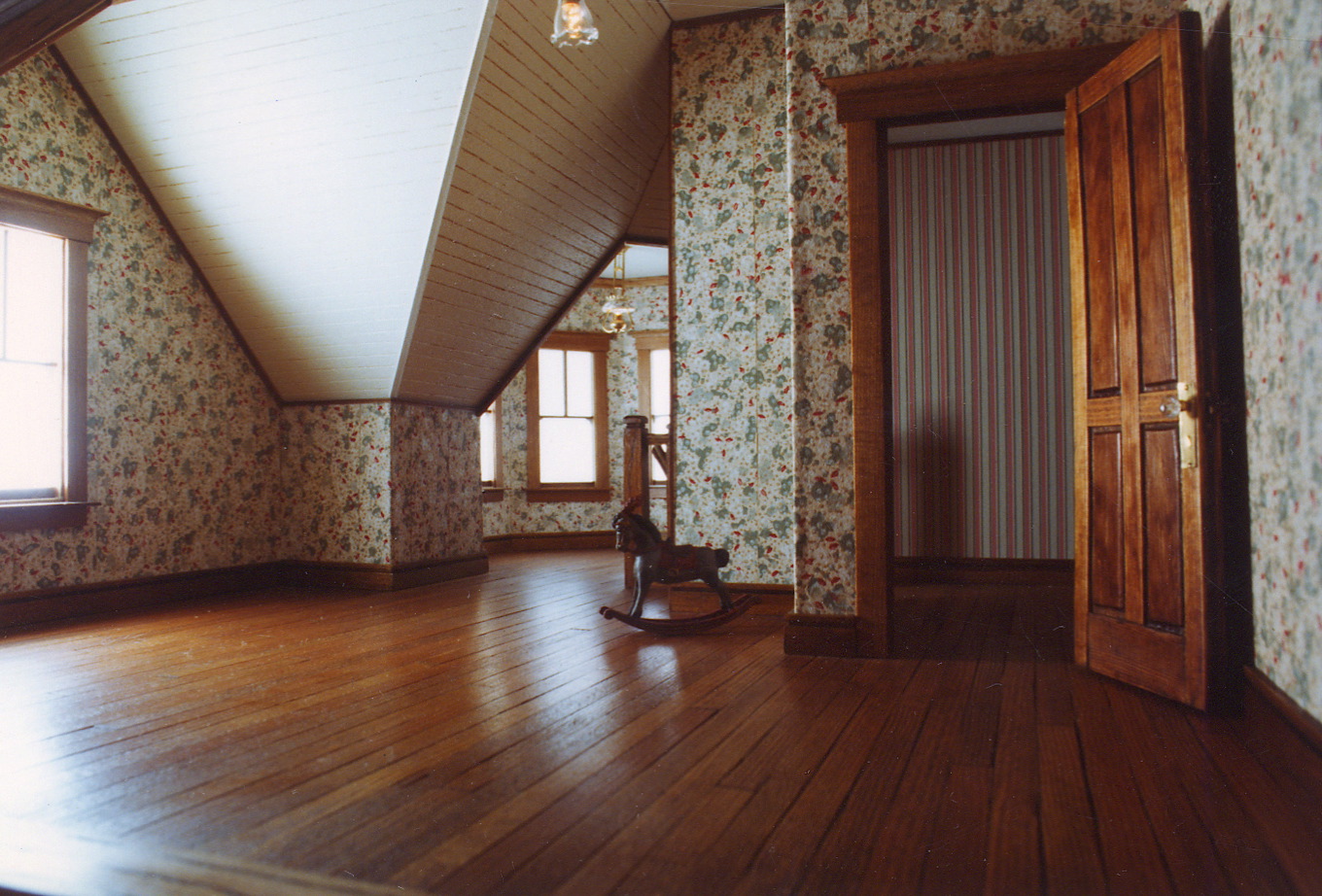
Seaview 3rd floor bedroom clay-based wallpaper

Years earlier Noel’s daughter Robin had observed that walls covered in a single sheet of paper were unconvincing—they had to be cut into in-scale strips, and butted together. It was one of those details that, added in with the rest, made up what we would later call the illusion of reality—part of what evokes the viewers’ memories, and gets them involved.

2nd floor bedroom with clay-printed paper

We also found that coffee stir-sticks for decorative shingles wouldn’t fly—they were out of scale and looked dopey. Instead, we learned to slice scallops and diamonds from cedar stock, thousands of them on a Dremel jig saw, thin enough so the built-up thickness would work in 1/12 scale. Each roof shingle was hand-cut from veneer. I would go into my Shingle Zen and just cut and glue until it was done. It became a fairly relaxing escape. People ask how many shingles, or how many floorboards, or bricks went into a house, and we don’t know. The point wasn’t how much, but to do it, and make it look convincing.

And yes, to the gluers out there, it was all done with Elmer’s white glue–floors, moldings, shingles, bricks and wallpaper–to this day everything remains in place. The miniaturists reading this will recognize the Glue Wars to which I refer.

"Hey kids, don't try this at home!"

Oops! Noel just reminded me about the triple digits and left palm the mordant blade redesigned. Over time, the scars have gotten lost in the general topography of his hands. Just the other day he confessed to a friend, “The main reason I’m retiring is I’m afraid of the table saw.”

Posted in Miniatures | Tagged , , , , , , | 1 Comment

The Large and Small of It

Sydney's Bay House, watercolor by Noel

The year we built The Seaview, 1976, was also the Bicentennial year, when a nice “older” couple (probably younger than Noel and I are now) in Oysterville, WA, at the north end of our peninsula, befriended us. They had us for dinners, plied us with drinks, and charmed us into helping organize the town Bicentennial celebration. They also happened to live in one of the oldest and quaintest houses in the area, an 1869 house full of history, architectural quirks, and a resident ghost, all of which gave us lots of first-hand research for our houses. Besides giving us a nice break from our many jobs (not to mention adding the task of the Bicentennial picnic and crafts fair…), they introduced us to their daughter Sydney (perhaps due to the favorable reception we had with Mrs. Crouch, her parents’ household ghost, who made an appearance the first night we were there.), newly relocated from San Francisco. We became friends, and Sydney liked our dollhouses so much she asked Noel to design the bayside house she would live in for the next  20 years. An architect and some talented craftsmen/builders took over from Noel’s initial rendering, but he got it started.

The Bay House--full-size

You may recognize the board & batten treatment used in teaching projects of ours like the Beach Cottage and the Garden Shed. Besides being a good friend, Sydney blogs on community life and chicken farming in the little town of Oysterville: www. sydneyofoysterville.com.

Sydney Stevens

Posted in Miniatures | Tagged , , , , , | Leave a comment

Fish Tales, Perry Mason & Bug Juice–the Summer of ’76

Noel at the Helm

The summer of 1976 saw the Seaview walls rise, rooms begin to take shape. To pay the rent, Noel baited hooks for a charter boat skipper. I still had my noontime radio program, and tried to grow corn in a fog bank—our town of Seaview made up one segment of a 26 mile long sand spit, jutting into the Pacific Ocean and adjacent to the mouth of the Columbia, where the average rainfall was 6 ft. per year. And, no matter what, the fog moved in every day by 4:00 p.m. The corn grew to about 3 ft., and stopped. It was all the energy it could muster from the limited sunlight.

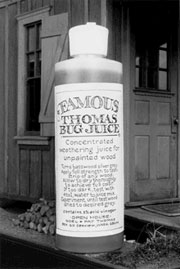
Most of our time was spent in the studio, nose-to-the-grindstone on The Seaview–a house that needed to put us up front in the miniature world. It was time to pay attention, to make a great house, not just a good one. Until then it had been somewhat of a lark. We had fun, our houses had been received well, and we thought we had the right talents to make a respectable structure; we loved old houses, Noel had his design talents and impeccable eye, and I had been raised in a 200 year old farmhouse my parents kept in a constant state of rehab and restoration. Weekends Dad would take out one of the old windows, strip off decades of  milk paint, re-caulk and oil it, and put it back in. Anything with paint was a project. One day in the third grade I came home to find my mother had ripped out a plaster and lath wall between the kitchen and a pantry to make a dinette, or what she called The Buttery. They also tore off an inappropriate Victorian porch, stripped and refinished the floors to reveal the foot-wide heart pine planks. Their labors armed me with skills that could be miniaturized. Famous Thomas Bug Juice

Then there were the skills we picked up along the way: glass etching so we could recreate period decorated windows and doors. A hunter told us about a wood-aging solution for gun stocks, the same formula that would become Famous Thomas Bug Juice, a product we still sell to fellow craftspeople.  While still in LA, Noel learned to make copper-foil stained glass, and the woman who came to our office to cut hair taught me how to cut Noel’s. That last skill may seem a bit of a stretch, but it did help us save money in our seat of the pants lifestyle.

In order to finish a house as complex as The Seaview in 2 ½ months, we developed a strict work ethic—up at 5:30-6:00 a.m., no TV during working hours, meals in the studio, and work until bedtime, which was often after midnight.  Noel cut and assembled walls, and milled trims, decking and floorboards. I sliced and applied shingles, flooring, molding and wallpaper.  Relief came in the form of the requisite nap—1 hour at noon, sometimes out in that rare commodity, sunlight.  To discourage visitors and the chatty UPS man at siesta time, Noel made a nap sign that hung by the front door. The other break in the regimen came when Noel started looking shaggy–we’d pull up a chair in front of our tiny TV and turn on Perry Mason re-runs while I snipped and he snoozed. The payoff was watching the rooms come alive.

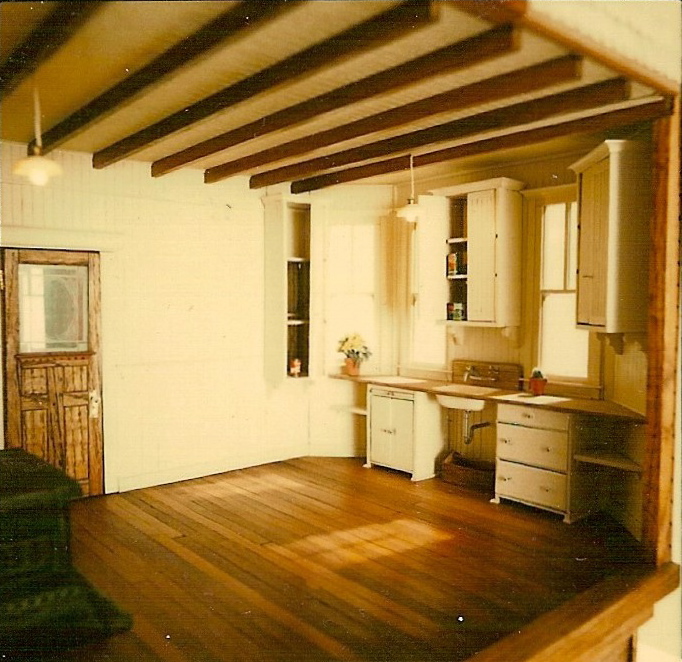
The Seaview Kitchen

Posted in Bio, Houses, Miniatures | Tagged , , | Leave a comment