Kaboom!

Mt. St. Helen's erupts, May 18, 1980, USGS Photograph taken by Austin Post.

Our biggest event of 1980 was the eruption of nearby Mt. St. Helen’s on May 18—not exactly in our back yard, but close enough. At around 8:30 that morning a plume of molten rock blew 80,000 feet in the air, sprinkling 11 states with ash, melting several glaciers within the volcano, and triggering widespread landslides. Rivers and towns were clogged with debris, and 57 people lost their lives. The cataclysm blasted the Spirit Lake YMCA Camp that Noel attended as a boy, along with the codgerly and stubborn Harry Truman, owner of a nearby lodge Noel remembers, into the cosmos. For our laid-back (and largely unemployed) friend Rocky–who just happened to be giving flying lessons, and own the gas tank, at the tiny Toledo, WA airport that would become the base of rescue operations, and the world press—it meant a living. When the mountain blew he was eating cereal in a lawn chair, camera in hand, watching for the eruption. Not only did he get a series of photos that would sell thousands of posters, but he had the notion to scrawl a sign on sheet of plywood, and post it at the entrance to the airport—Rocky’s Volcano Flights.

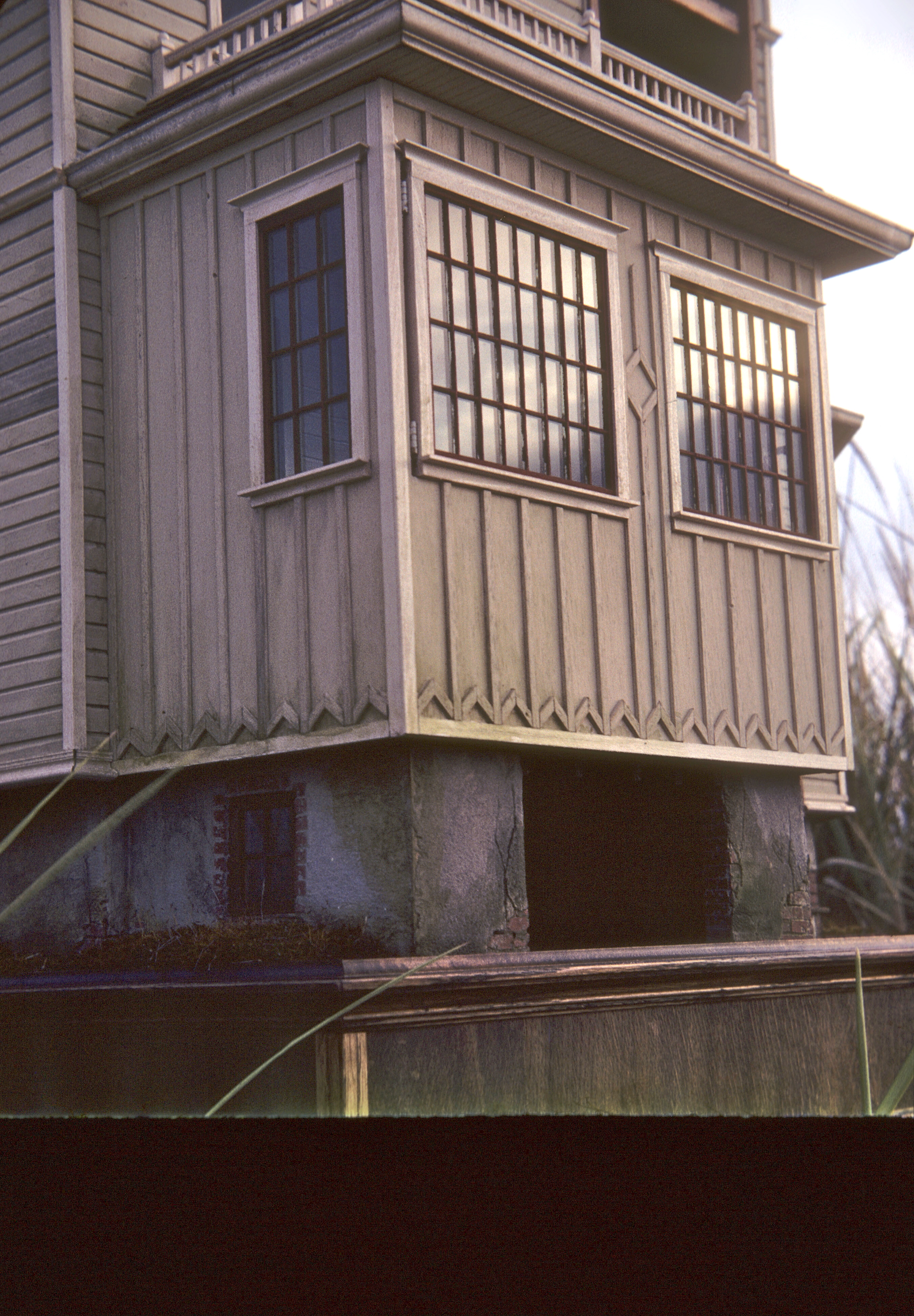
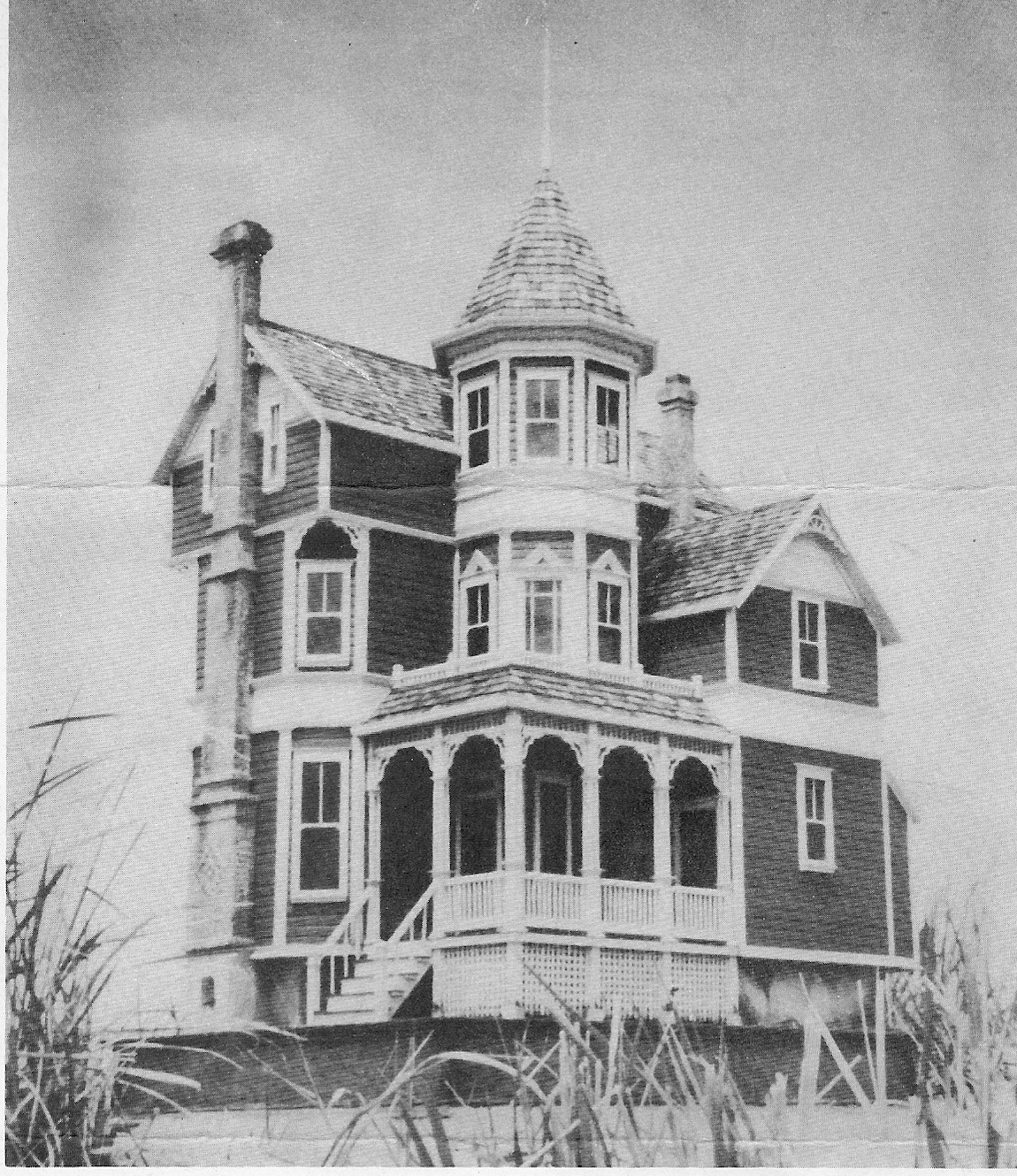
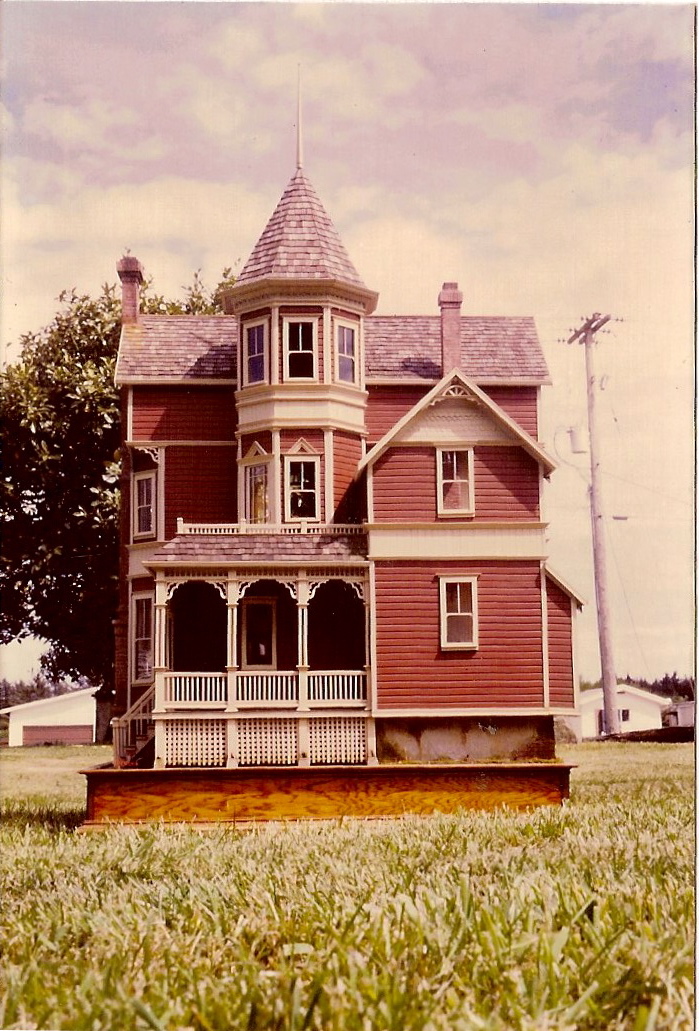
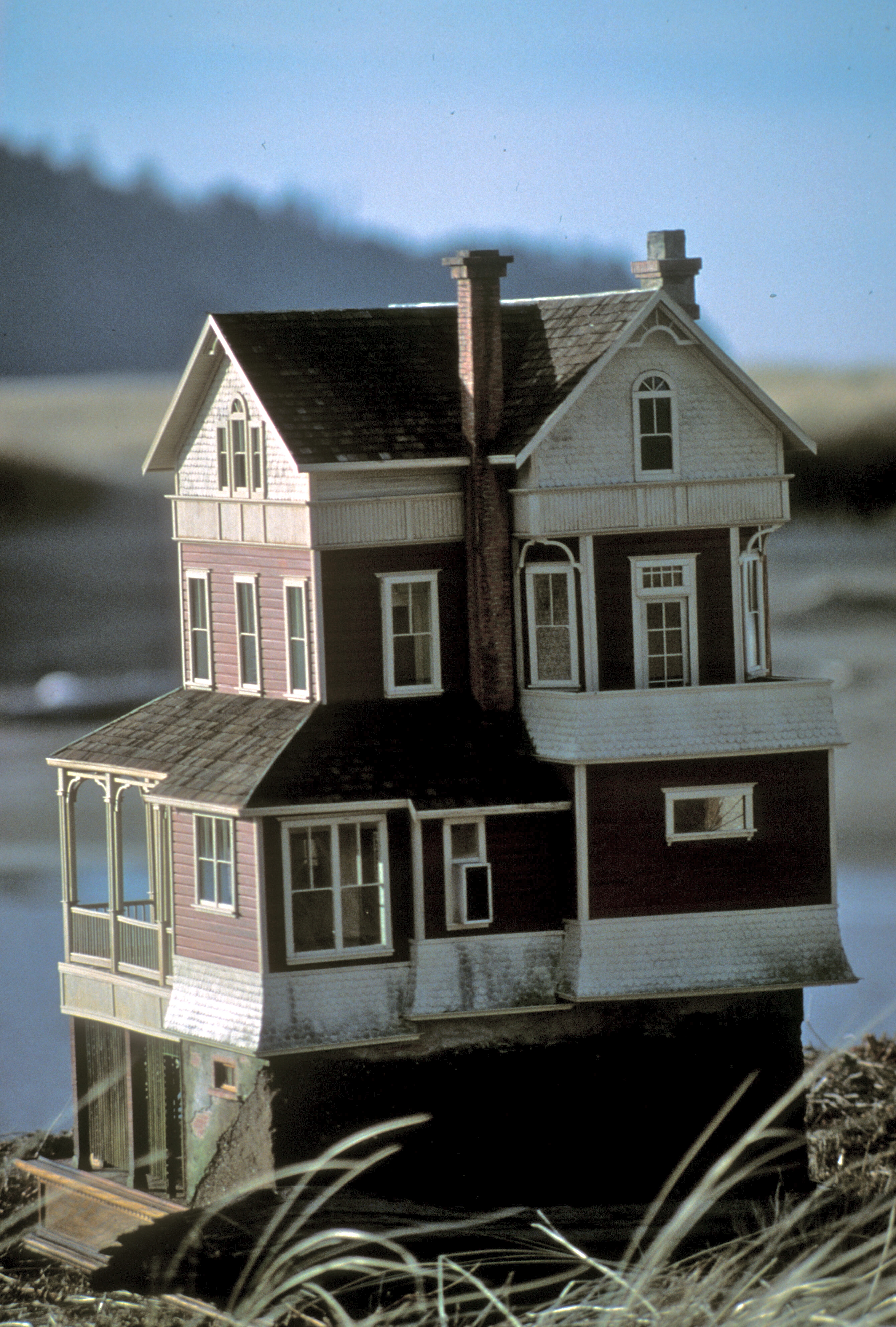
Mt. St. Helens miniature house

Our part of the state was spared devastation. In Seaview our eyes were glued to the TV coverage, while our hands were rolling out # 23, a house suddenly named the Mt. St. Helens. We were relieved to have only a little ash in the yard (I ran out with a vial to dust it off the plants with a paint brush), and, eventually, endless balls of pumice rolling into our beach.

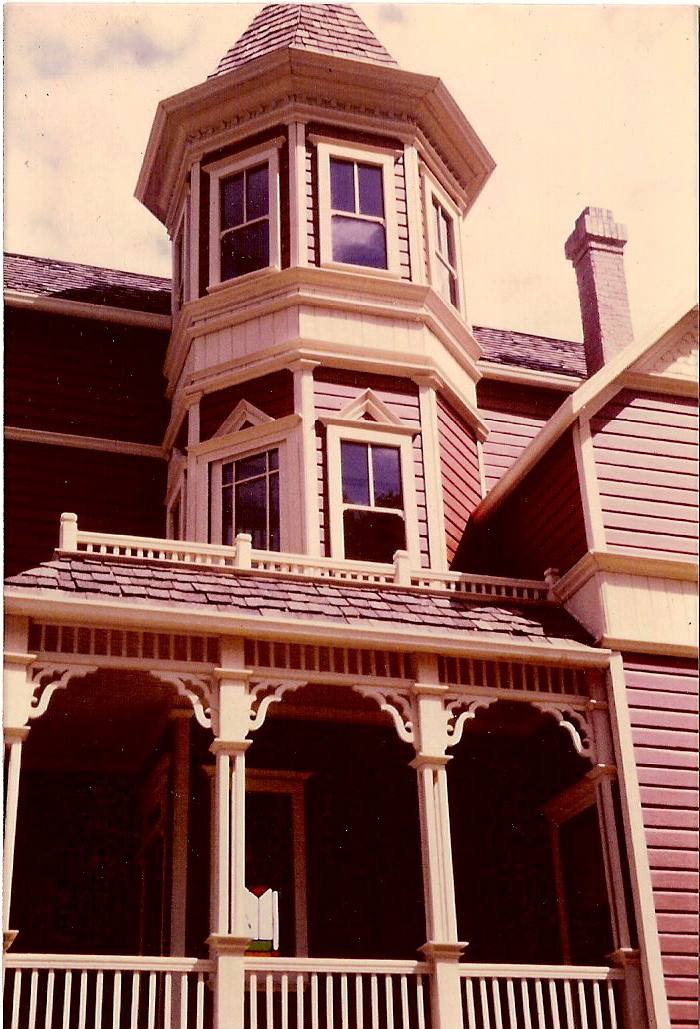
Tower exterior

For this project Noel decided to vary our architectural menu by designing a house with a square tower. The tower enclosed a large, wainscoted room with tall windows that could be used for star-gazing. And for more romance, a hatch in the ceiling lead to a small widow’s walk on the roof. The flip side of the hatch held a bench from which to view the skies.
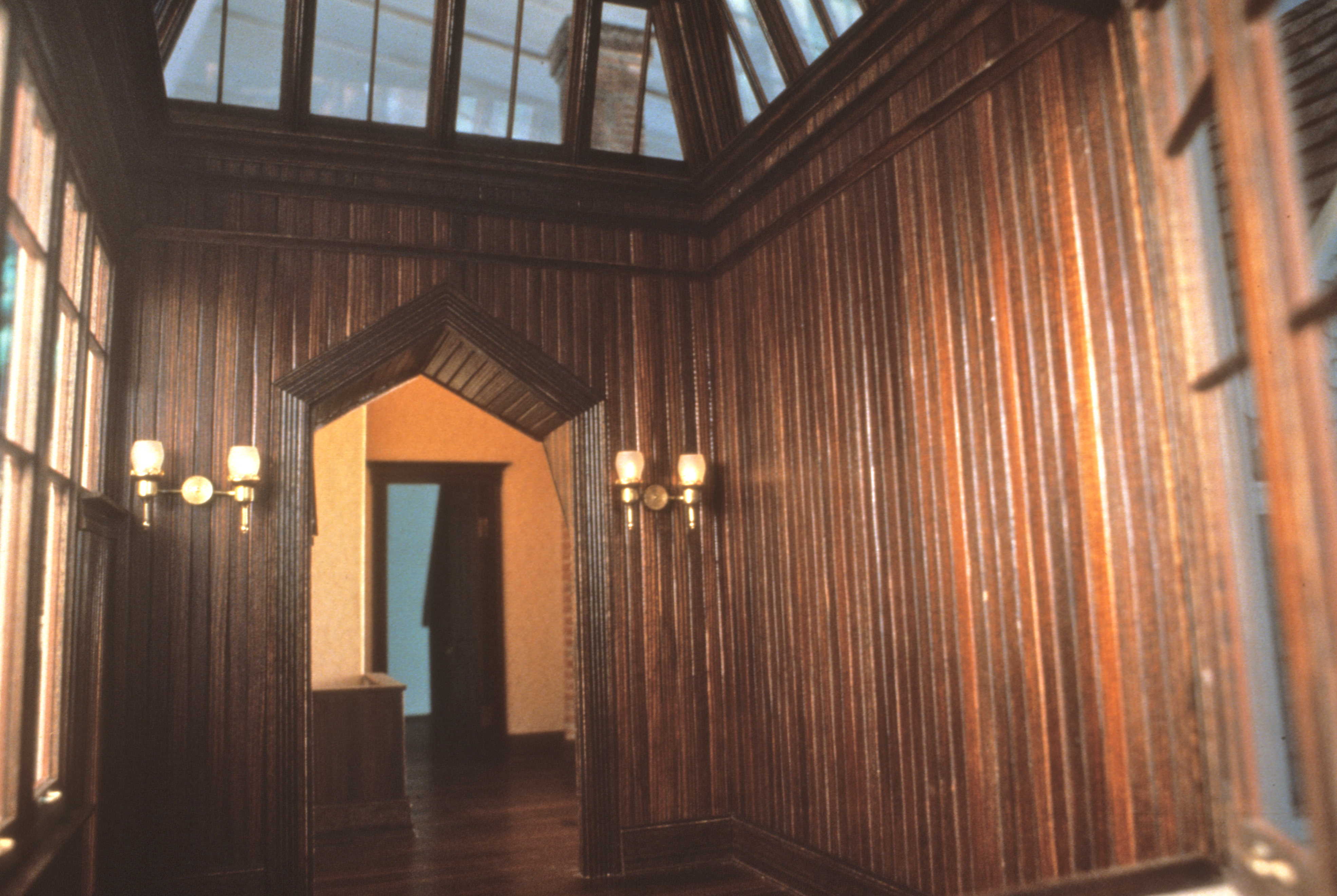
Tower interior
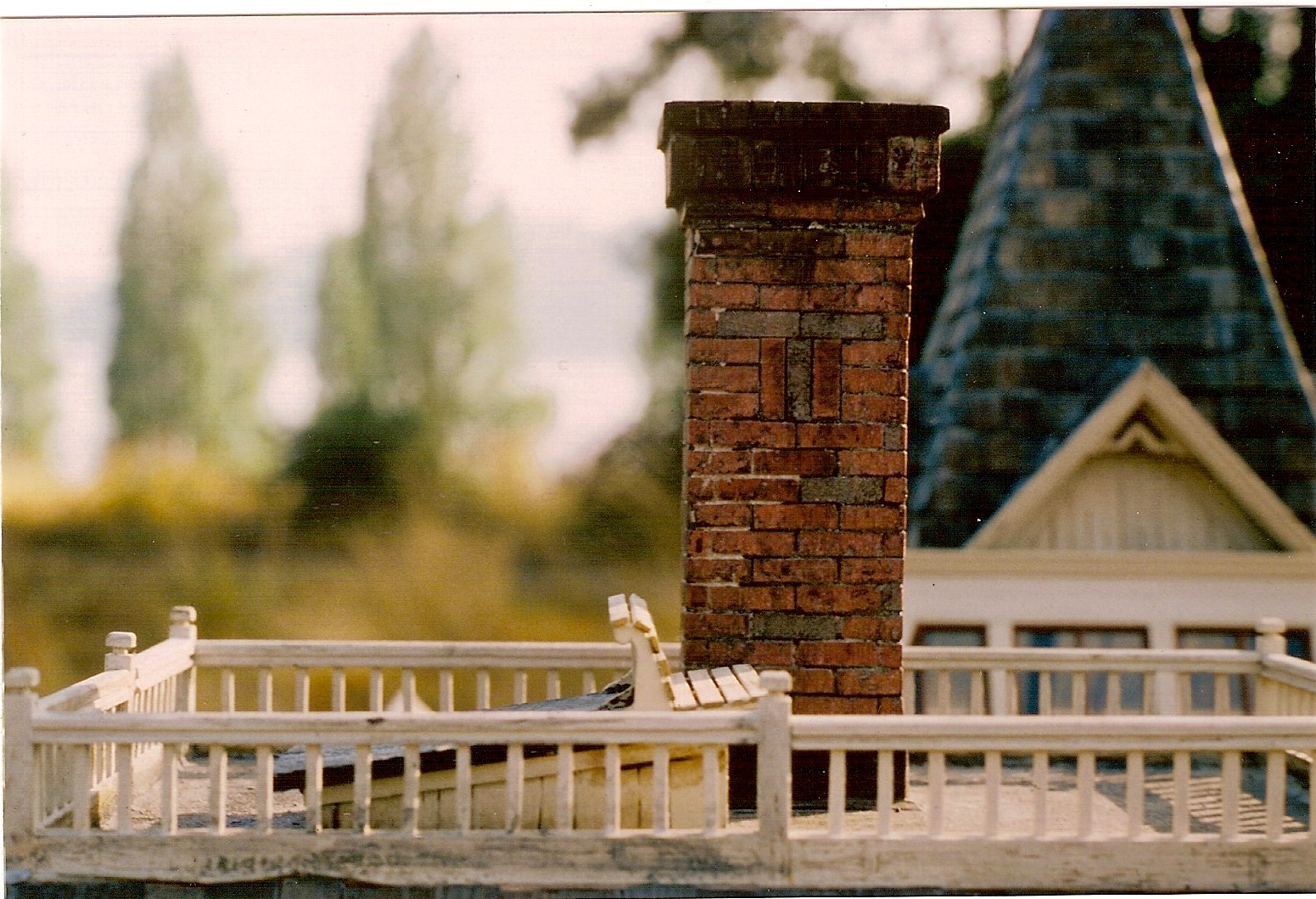
Widow's walk with bench

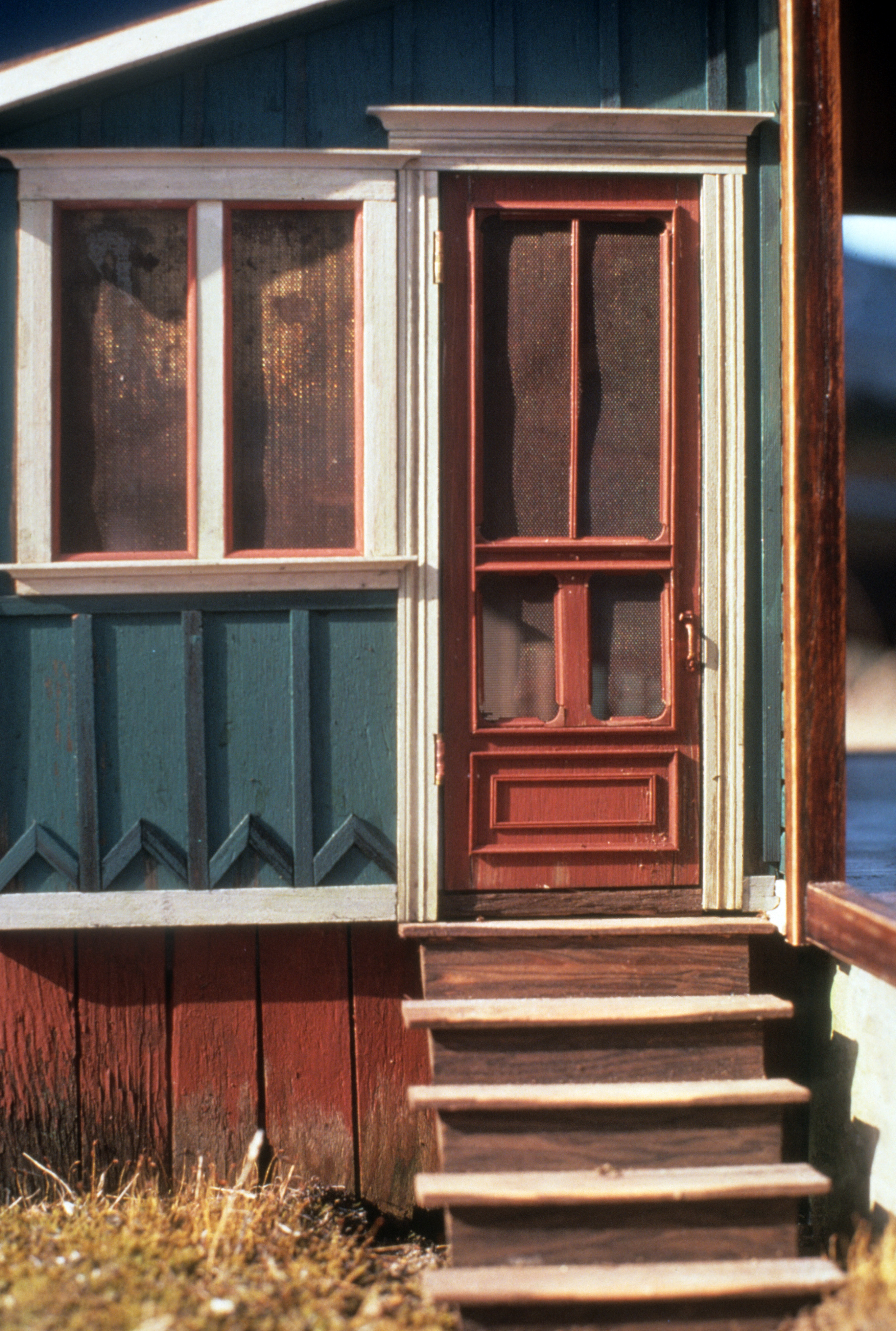
Plus, the house had the kind of back porch I imagined as the mythical Granny-inhabitant’s perfect, solitary retreat to cool off after a hot summer’s day of cooking and canning. As with many houses of the period, and locale, the back porch was an add-on, sided in board-and-batten rather than the more expensive horizontal drop-siding on the main structure. Back porches were always an excuse for a screen door, and a chance to try another kind of spring, so it would close with a convincing little slap, of the kind that made your mother yell, “How many times have I told you kids not to slam the screen door?!” Over the years we tried springs from old cigarette lighters, ballpoint pens, and then a little envelope of  3/64th” springs that turned up, either from a friend or from one of our foraging missions at the surplus warehouse in Seattle. They did pretty well, though I don’t know how they held up over time.
The finishing touch was to be the ash, sprinkled on the rooftops and ledges, but my vial-full  from the yard wasn’t going to be enough. For that we called on Rocky–now owner of 5 airplanes, and official transporter of the Air National Guard and world vulcanologists–who flew in with jars of ash, and tiny pumice for the garden.

Posted in Bio, Houses, Miniatures, People | Tagged , , , , , , | 11 Comments

The Pipe Dream of Miniatures

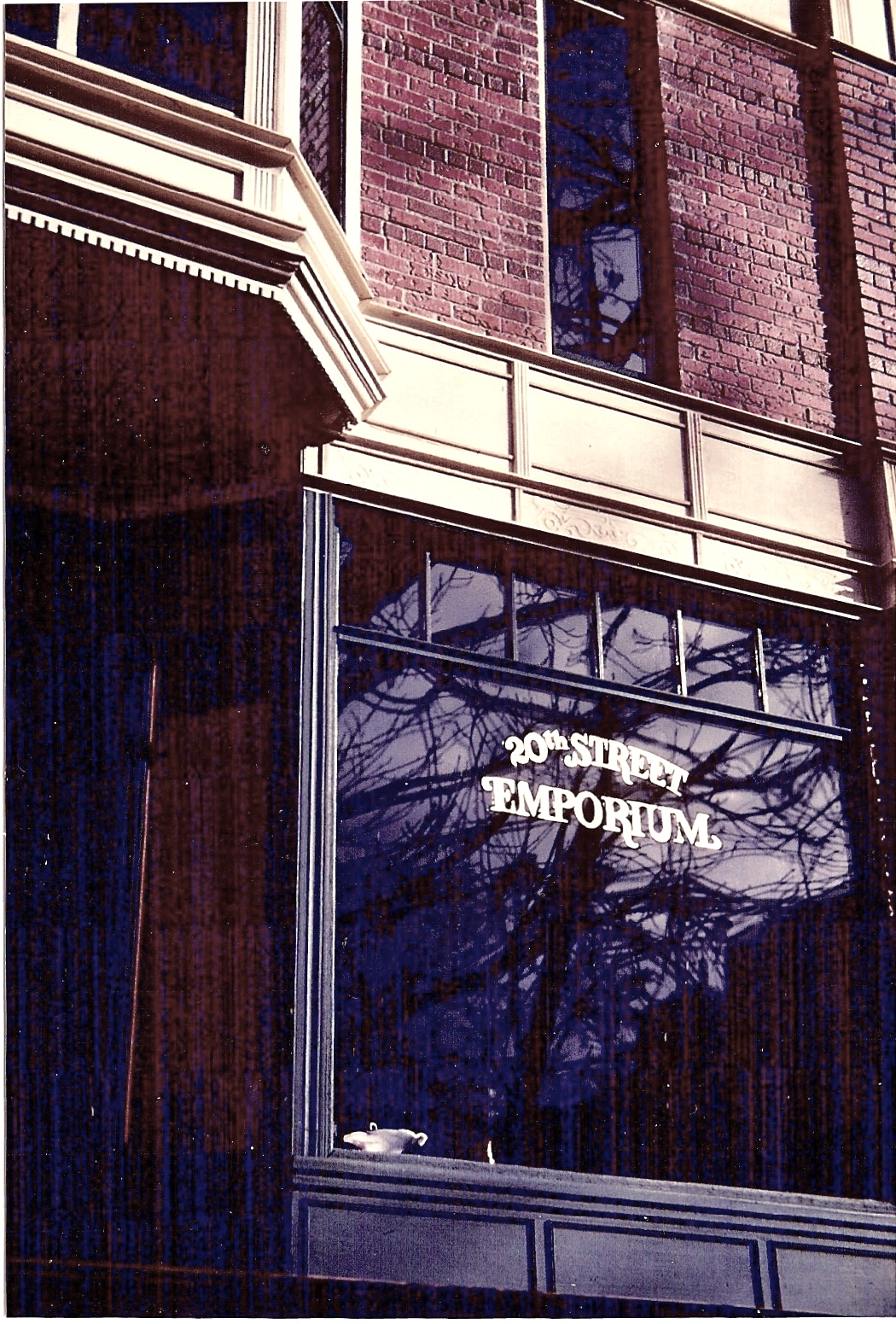
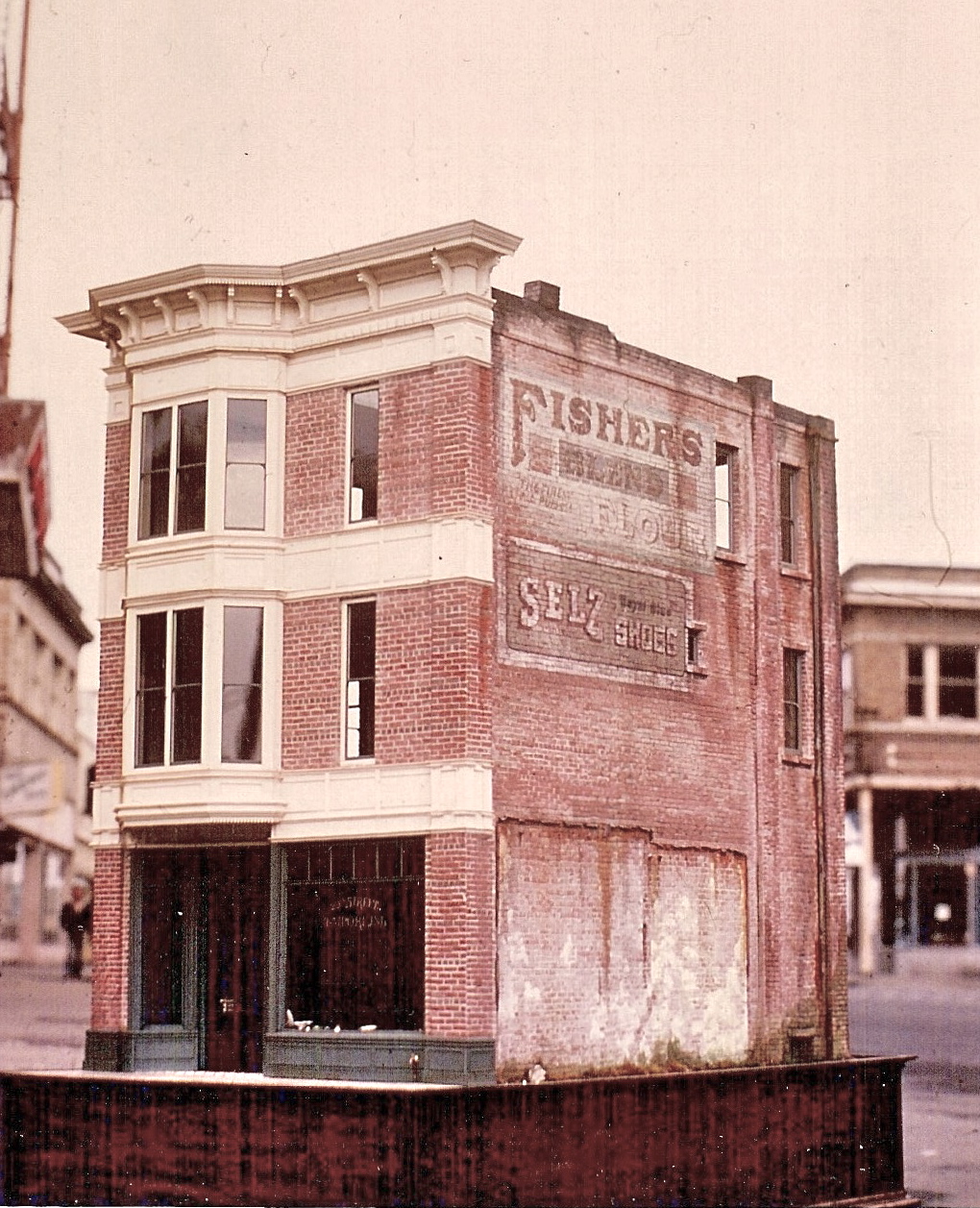
20th Street Emporium miniature building

For us, the appeal of the 20th St. Emporium commission was the idea of a shop with an apartment above, combining the bustle of public space with the private, domestic life upstairs. Miniatures are never simply about the objects or the architecture, they are about the lives of the inhabitants of small spaces. We learned early on that the adult’s attraction for dollhouses is the same as the child’s—we want to get our faces in each room, close enough to imagine ourselves inside.  It also involves the attraction of voyeurism, what we see through the window when we walk down a street at night, glancing into homes with people sitting around the dinner table, or reading the paper. We are drawn into their lives, the hominess of the scene.  A world of illusion, without strife, or bills to pay. This is why we designed our houses and buildings to look complete on the front, but then to have every interior space as accessible as possible, either through open walls, or window sections that swung open for a larger view. Yes, little rooms like bathrooms, closets and halls were often available only in glimpses, or with dental mirrors, but that has its appeal too. Every view offers an invitation to dream.

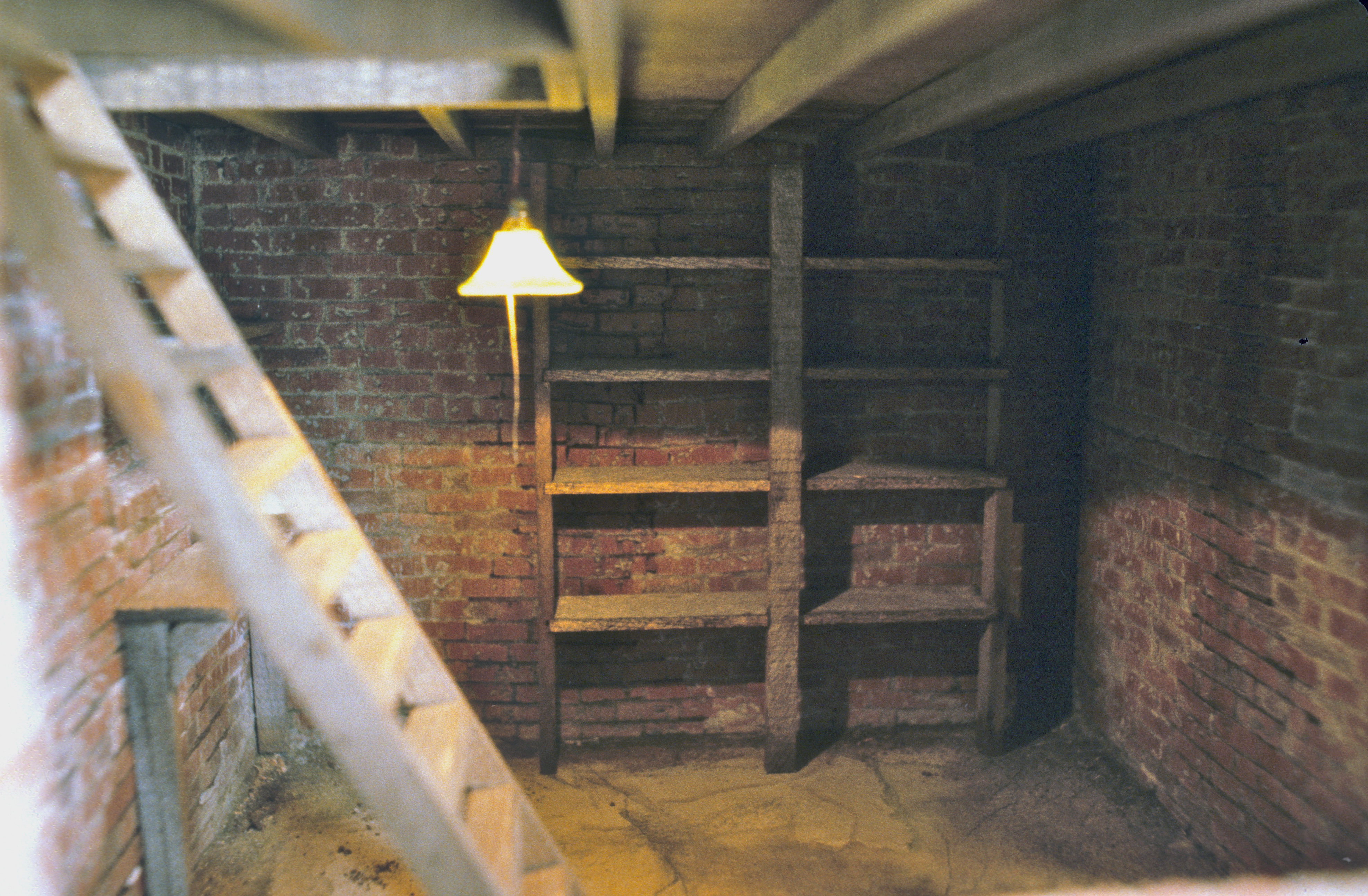
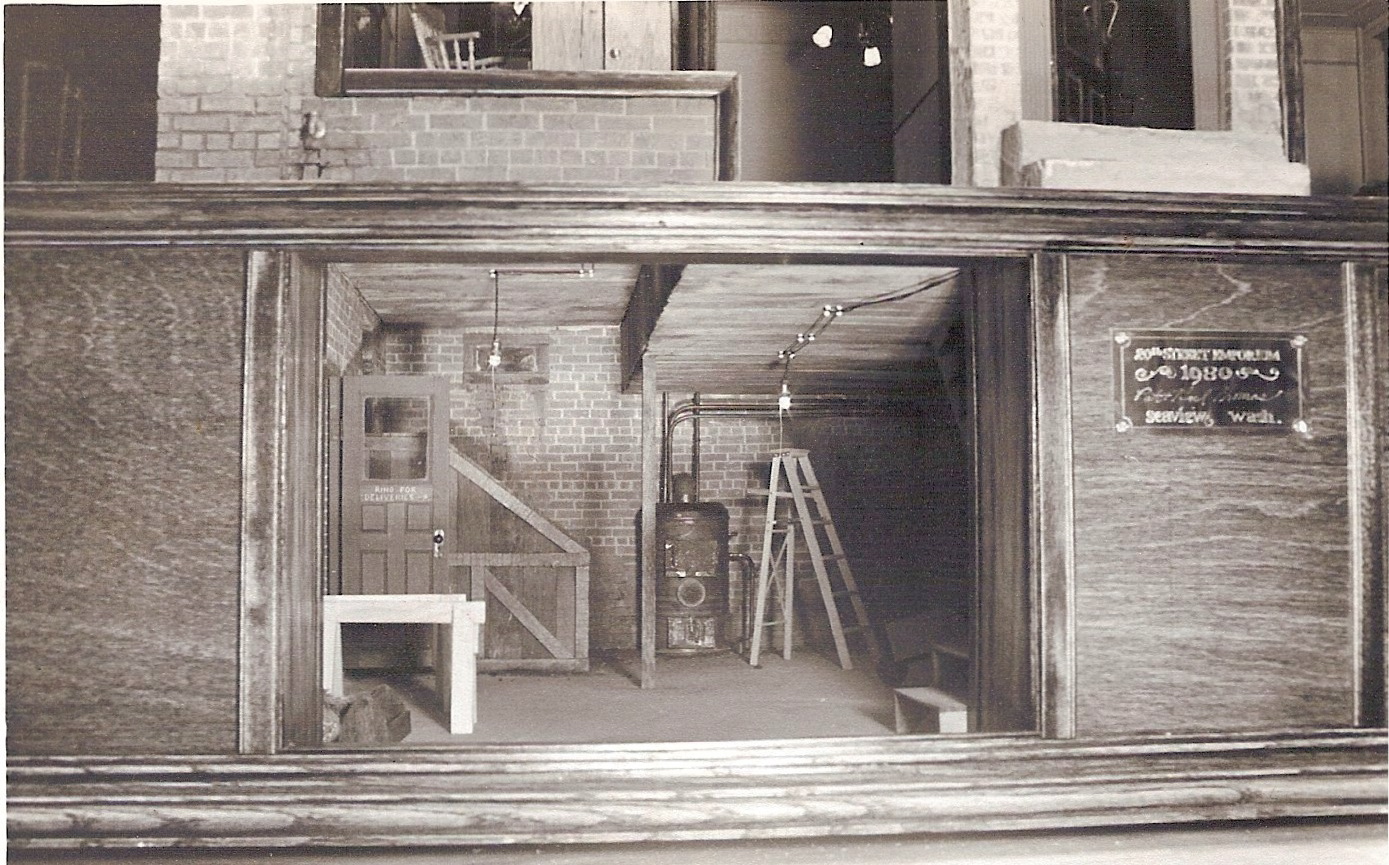
I found this B&W photo of the Emporium basement, taken by the original owners, Mr. Peepers Miniatures in Seattle. Besides all the detail we built into it—furnace, coal bin, tiny window, lighting strung across the ceiling, brick walls, cement floor—it is two other details, provided by the owners, that bring this room to life—the set-up ladder, and the open door. It is no longer a replica room, but a scene from life.  Someone has just left the room, we imagine, maybe to find a bulb to replace the one over the ladder. We have been transformed from watchers to participators. We believe. It is that element that kept Noel and me going all those years. The building was just the foundation, so to speak, for creating that feeling of someone just having left the room.

Emporium Kitchen

Noel and I have both been apartment dwellers, so the Emporium kitchen reflects everything we wished for in our apartments—an eat-in kitchen, and window over the sink, from which to watch the world while washing the dishes. We sacrificed counter space to make the room for the old fashioned Roper range and fridge then on the market. The cutting board is pulled out, and there’s that tell-tale open door again. How simple it is to capture us, once we want to be caught.

Bedroom off the kitchen

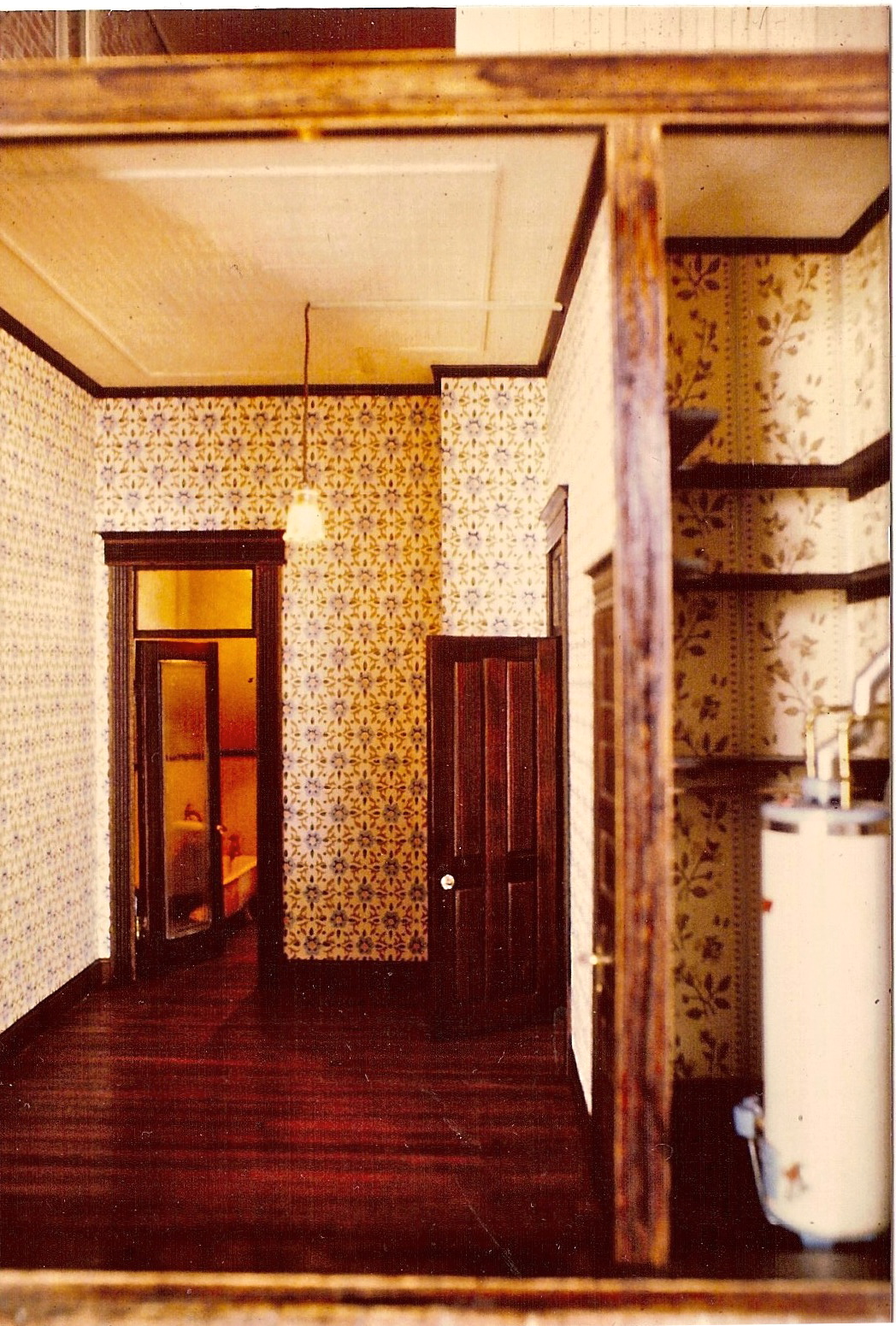
In our own house, as well as in many old homes we visited, there was usually a closet or two that hadn’t been redone when a room was updated. Instead you saw old pink calcimine paint, or out-of-style wallpaper from an earlier era. Another trigger for the imagination. The side opening of the Emporium provided a perfect location for such a closet. Plus, Mr. Peepers had just found someone making detailed and in-scale water heaters—the perfect addition to the room off the kitchen.
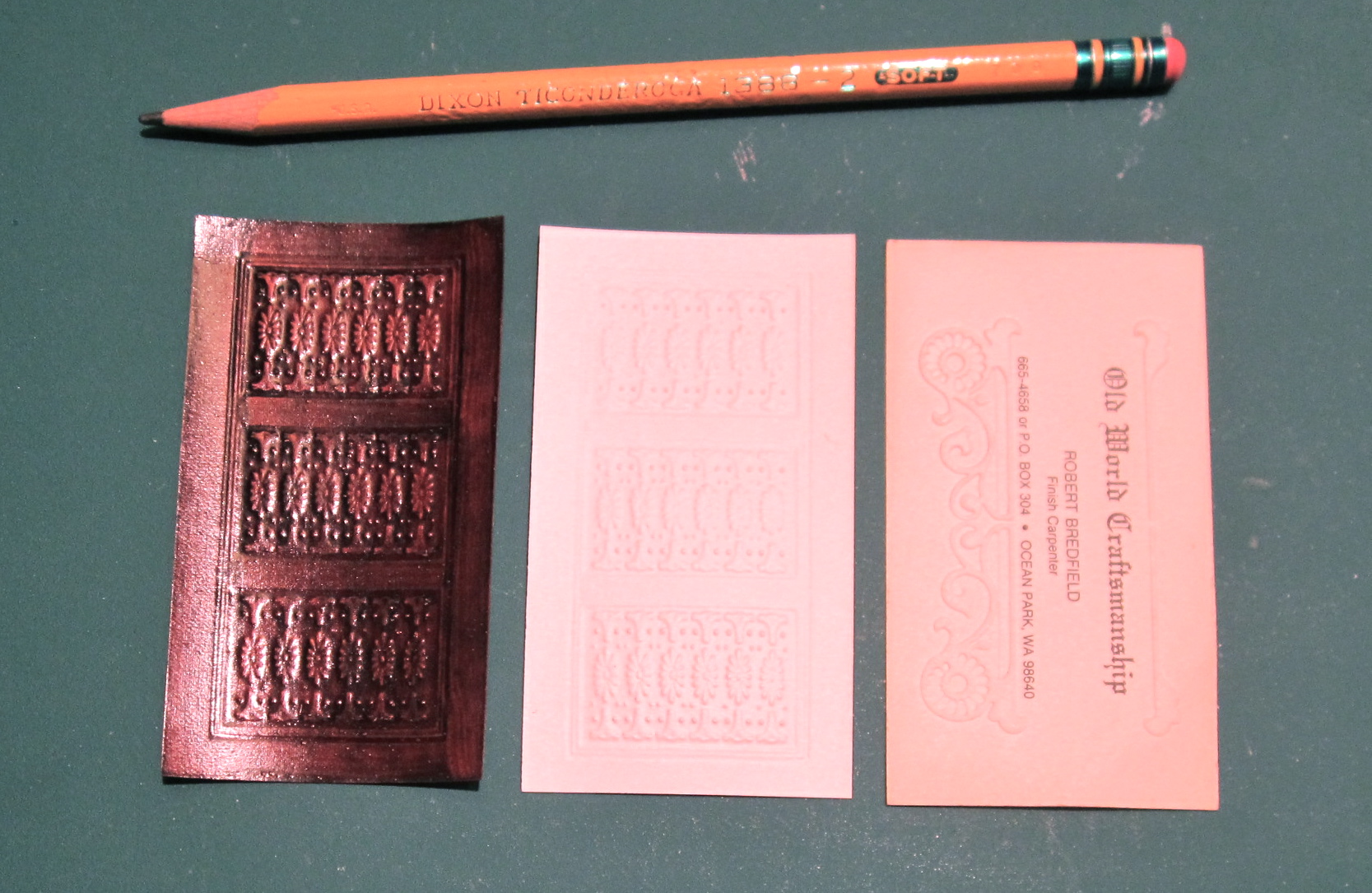
What’s barely discernible in these photos is the pressed tin ceiling, a staple of apartments and commercial buildings of the era. The project involved expanses of ceiling space, so we needed a good solution. In another case of friends helping friends, combined with the Eureka process, we talked over our dilemma with Bob, a contractor friend and aficionado of Victorian detail. His face lit up as he reached into his shirt pocket, pulling out his newly printed business cards. They were embossed with an ornate Victorian gingerbread design. He said all kinds of designs were available at the local printery. This immediately morphed into our finding an embossed design that could be ganged-up on a business-sized card to look like tin ceiling panels.  Rick the printer loved the idea (he also printed our miniature newspaper insulation) and helped us find a suitable design. The bas relief was subtle, just enough to translate into the feeling of pressed tin, without drawing too much attention to itself. One sensed it was there, and knew what it represented without thinking about it. An added benefit was that when we glued the “panels” to the ceilings, the card stock warped slightly, just the way the full-size tin panels do. Once they were in place, we painted them off-white, with enough gloss to reflect off the raised portions.
Embossed business cards for tin ceilings

Of course the minimum order was a box of 500, far more than we needed, but the box was small, and the price not astronomical. We used only a fraction of them on the Emporium, and later used more to represent the embossed wainscotings Anaglypta and Lincrusta–popular turn of the century wallcoverings–in a formal library room, by staining the panels brown. My New England parents taught me never to throw anything away, giving us permission to hoard many of our supplies, and possible supplies (some day I’ll write about our rust collection).

Posted in Houses, Miniatures | Tagged , , , | 9 Comments

With a Little Help from Our Friends

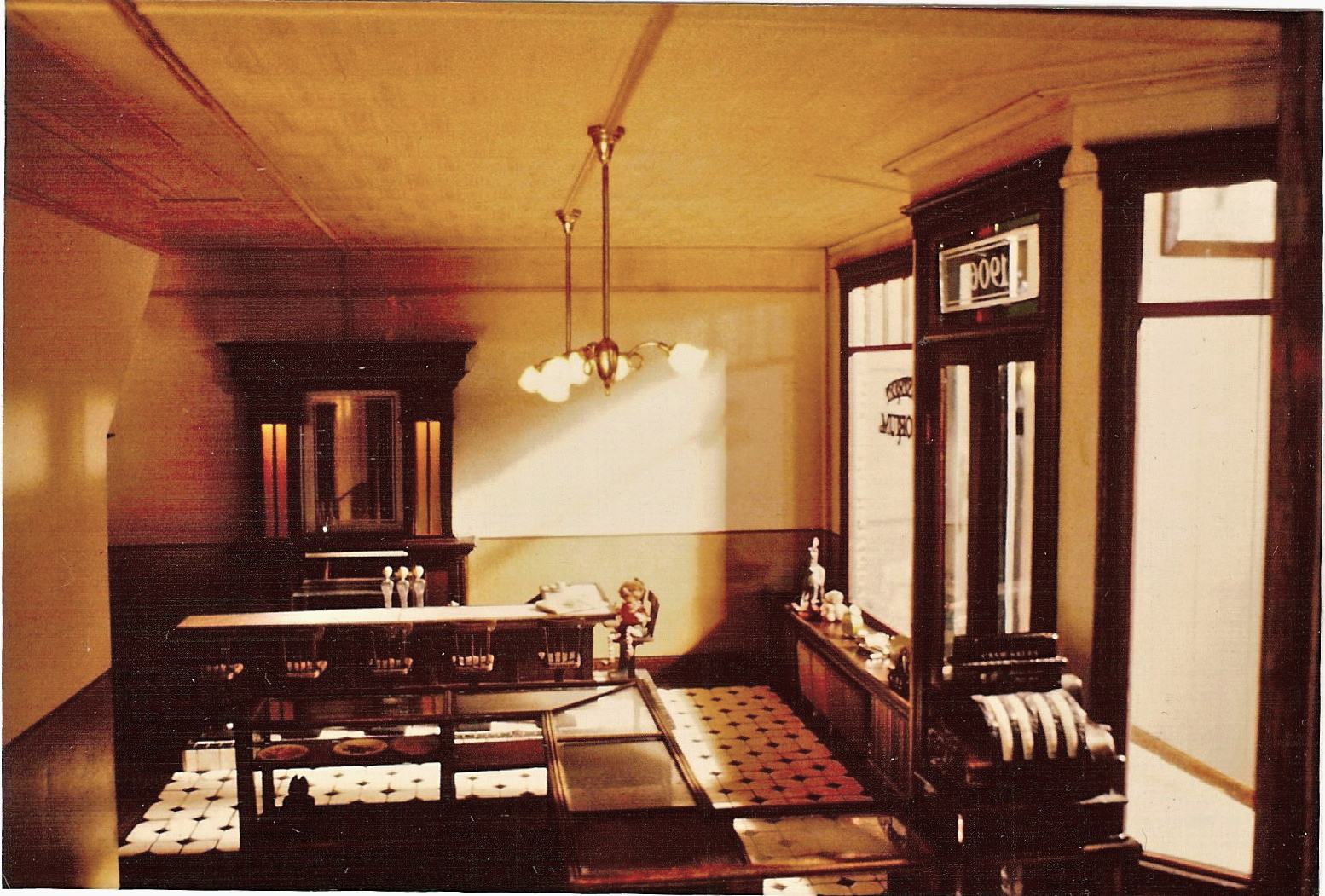
Emporium soda fountain with tiled floors

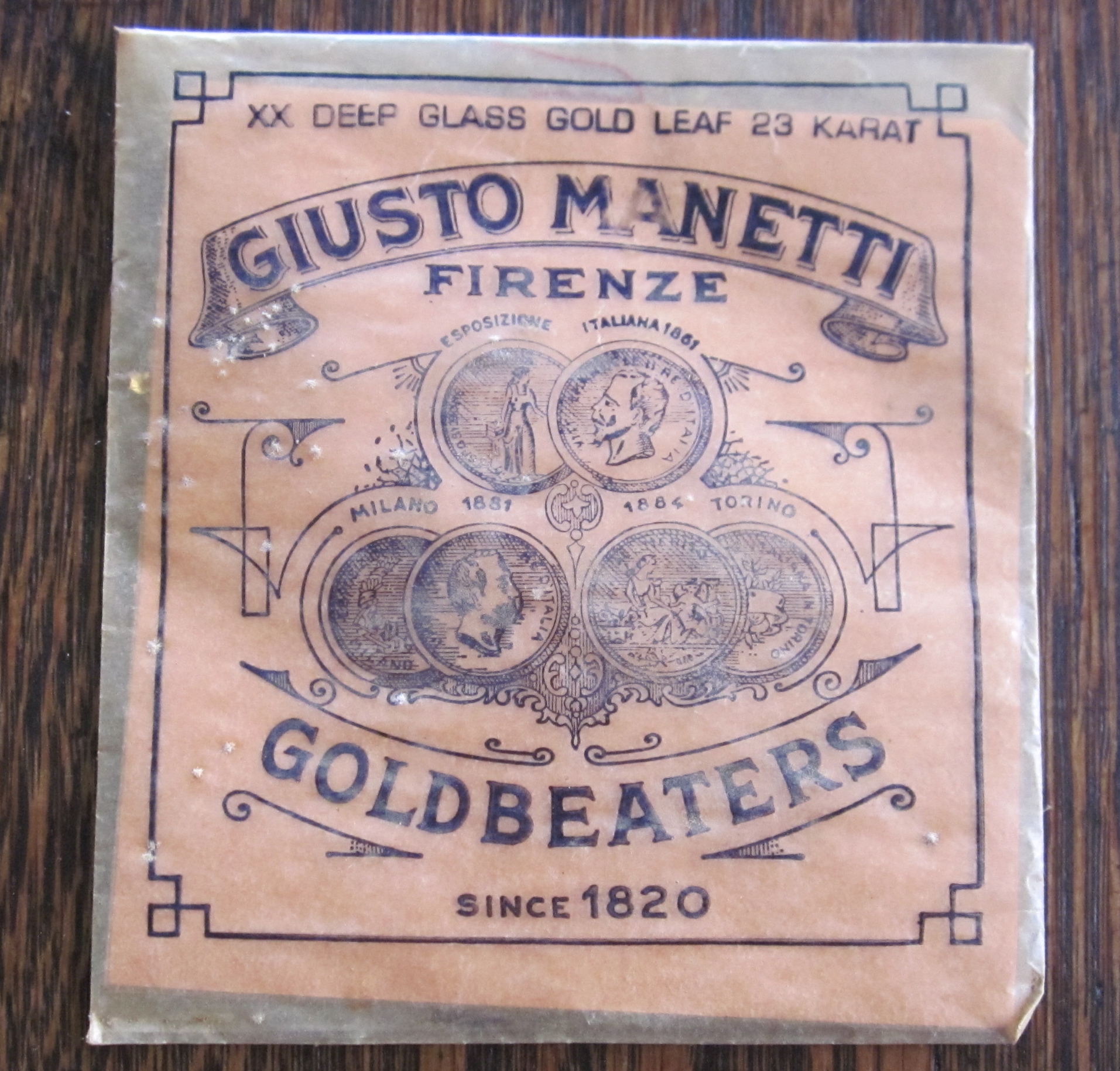
Being our first commercial building, the 20thSt. Emporium required a jump-start for our learning curve. The three-story structure would include a 7-stool soda fountain and mirrored backbar. To show it off we wanted gold-leaf lettering embellishing the reflective surface of the old wavy-glass display window. We also wanted a real tile floor, not an embossed paper look-alike, preferably white tiles with angled corners to allow for even tinier black tile inserts at the junction of each cluster of four. Again, tile would reflect more light, and draw the viewer inside. We wanted the building to have a warm, gem-like feel. How we would accomplish these things was a mystery, but we forged ahead, and waited for the solutions. This time they came from people we met along the way.

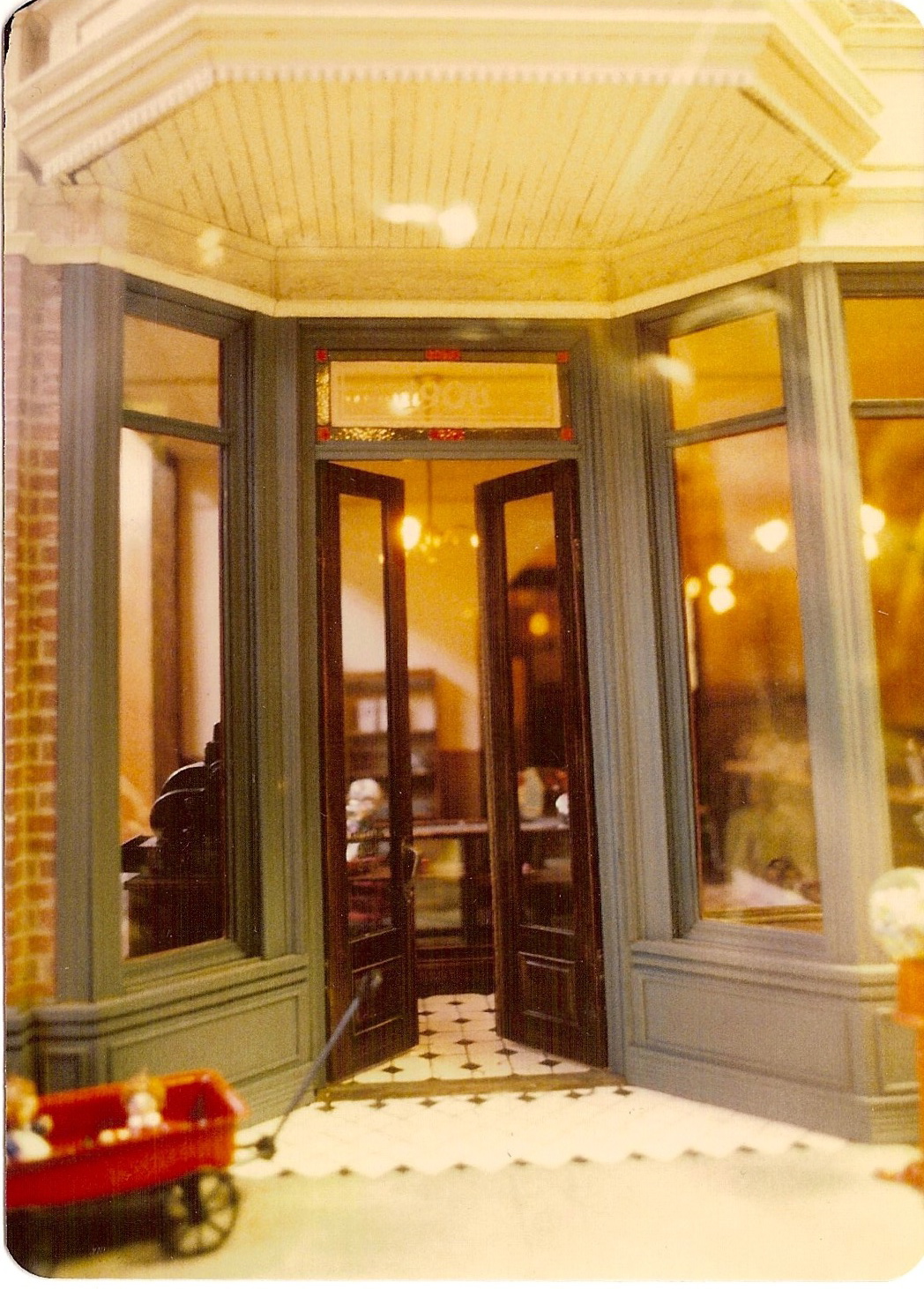
Emporium entry

At one of the early miniature shows, we ran into Marie Freidman of Portland, OR. She was selling egg-shell thin dinnerware, Delft tiles, light fixtures with real cranberry glass shades, and leather horse saddles, all made by Marie, and in 1/12 scale. At her home she showed us her multiple workshops, full of specialized tools and supplies. Marie was one of those people gifted with an engineer’s mind and a craftsperson’s soul. She could figure out how to make anything she wanted to, as well as complete it with an artist’s sensibility. She liked us and our work enough to offer to make lights for us, as many as we needed, just for the satisfaction of making them. Marie didn’t want our money, saying she’d figure out some kind of return down the road. When we asked her about making floor tiles for the Emporium, she was up for it. She built molds to fire hundreds of ½”sq. white tiles, new molds for the ¼”sq. black centers, and conjured a way to make the perfect angle cuts on each of the white tiles, so the black pieces would edge into the pattern smoothly (unfortunately I do not have a better photo to illustrate that pattern). It was our job to lay them on a near-perfect grid, and then age them, both to kill the gloss (we had no idea how shiny they would be, they all but jumped out of the room) and create a surface we could age with paints. The glaze turned out to be extremely hard, but Noel sanded, scoured, used glass-etching acid and rasped away enough of the surface to convincingly age them. Plus he broke and cracked a few in the corners and heavily trafficked areas. And, we had enough leftover to tile the entrance out to the sidewalk.

Gold Leaf lettered window, 20th St. Emporium miniature

The second chance meeting came one night when Noel went out for a beer at a place called The Sore Thumb—a moonlight business built and owned by, of course, a local contractor. On the way in he noticed a van decorated with intricate, hand lettered signs, much of it in gold and silver leaf. At the bar he joined a group of cohorts talking with a woman he didn’t recognize. Sure enough, she was a traveling sign painter, and gold leaf was her specialty. She latched onto the miniatures idea, and give Noel a quick course in using thin, fragile pages of gold leaf to letter on glass. This process of glass gilding involved buying empty gelatin capsules at the drug store (that took some explaining), which were then dissolved in water and applied to the glass as a sticky surface to letter on. She gave him a copy of her favorite book on the subject—Gold Leaf Technique, by Raymond J. LeBlanc—along with some specialized brushes and a tiny envelope of gold leaf—more than enough to finish a number of mini projects—to get him started. As Noel had learned hand lettering in advertising art classes at Los Angeles Art Center (in the Stone Age when young art directors specked type and hand-lettered their ads) he had the tools necessary to take on the challenge.

Along with help from the people we met along the way, I am reminded of a girl, around age 17, who wrote us a thoughtful and articulate letter, asking if she could come apprentice with us after high school, living with us and learning our techniques. She liked what we did, and aspired to become a dollhouse maker in her own right. We thought a long while, wondering how we’d respond if Noel’s teenage daughter proposed something similar. Plus, we knew we couldn’t work with anyone else—our schedule was too erratic, our methods and life-style too off-the-cuff, and our house and studio too tiny to accommodate anyone else. And we talked about the varied paths that got us where we were. Noel’s art and advertising background, my growing up in a 200 yr. old house, and majoring in theater and running the scene shop in college played heavily in what we made in miniature. Plus, we’d learned a work ethic from years of working for other people. Our Dear Joan letter back to the girl explained all this and suggested she go to college, learn about everything she could, get a job, and figure out what she liked to do.  Then, if she still wanted to make dollhouses, she’d have all the background necessary. Yes, killjoys, but maybe she’s out there doing something she loves. Given how motivated she was then, I have my hopes.

Posted in Bio, Houses, Miniatures, People | Tagged , , , , , , , | 3 Comments

The Birth of the 20th Street Emporium

Front window, 20th Street Emporium

In 1980 we seem to have slowed a bit, producing two structures, compared to the 3-4 we completed in previous years.  I sometimes imagine there was a time warp, or black hole, in Seaview that allowed us to make houses and watch The Muppet Show while the world with Jimmy Carter as President and the start of Iran-Iraq war spun on by. Given the elaborate designs and detail work of each project, I still don’t understand how we did it, but the hows and wherefores are surprisingly vivid.

The 20th Street Emporium 1980

The first structure of the year was The 20th Street Emporium, a Victorian commercial building, our first veering from strictly residential architecture. The clients ran a miniature shop, and wanted lots of rooms to show off their merchandise. The name was inspired by the 20th Street Drugstore where Noel’s dad would take him for malts as a young boy in Longview, Washington. The design and signage came from a trip we took to Port Townsend, WA, a late 19th century Olympic Peninsula hillside seaport known for its ornate Victorian architecture. It was also our first venture into the world of B&B’s—an expenditure we justified by it being a research trip. I booked it over the phone. The woman I spoke with let me know that arrival after 6:00 p.m. would be extremely inconvenient. Sure enough, we dawdled along on the scenic 4-hour drive, exploring the Hood Canal, and arrived at something like 6:15. Our climb up the front steps to the house on the bluff was rewarded with a locked door. We rang the bell, and waited. There was a click and a buzz, but we moved too slowly and found the door still locked. Rang again, with one hand on the knob, and were buzzed in to a Victoria foyer, which opened into a large, ornately furnished room, with a check-in area empty of living souls. Across the room was another room, the dining room, with a velvet rope across the wide opening. At the table a family was engrossed in their supper, studiously unaware of our presence. We approached. When we got to the rope we said we would like to check in. The woman at the table rose stiffly, came around to us through another door, and told us to go to the desk and ring the bell.

Port Townsend today--The Rose Theater

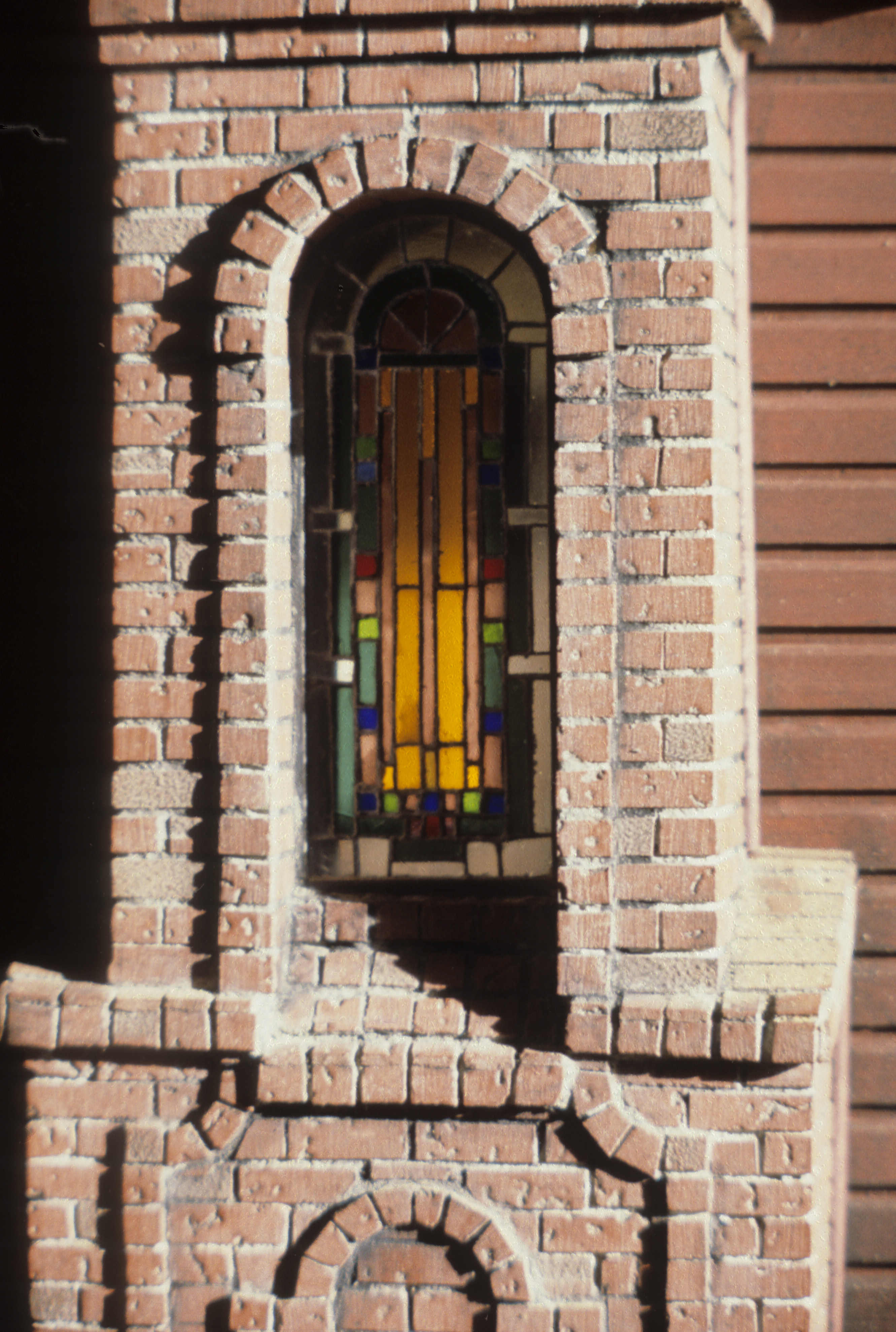
Despite the inauspicious beginning (and a couple of rather strained breakfasts with the owner and two other guests), we had a wonderful time. There was an iron bathtub long enough to totally submerge a body, though I was too frugal to fill it deeper than just covering my legs. Still, the bed was heavenly, and we were gaga over the Victorian-ness of it all. We explored the town, studied the rot and aging on glorious mansions, everyday houses and a slew of well-preserved 1880’s buildings downtown. The brickwork was our biggest discovery—finding out how bricks are laid in sections of 5 courses, with the bricks turned endwise (the end-width rather than the face-width of the brick) for the sixth course, for strength. Plus, it became apparent that bricklayers had their signature styles, and brickworks had their signature bricks. We spent most of our time with our noses 6” from the buildings, noting where things went wrong, or right. The signage was another find—Fisher’s Flour and Selz Blue Shoes being our favorites. Again, our interest was focused on how the signs aged, and how different they looked close-up and from a distance.

News Item in The Chinook Observer, April 1980

It was also a weekend that almost changed our lives. We fell in love with the smaller Victorians, the views, and the town as a whole.  It was a lifetime source for our dollhouses, and a ferry ride from Seattle. While driving the hills we stopped and talked to a man working on a house we could easily imagine ourselves living in. He was fixing it up to sell—something like $20,000-$25,000., which in 1980 was  steeper than it sounds, but still within our reach. Maybe. We could sell the house in Seaview, and move. We spent the evening dreaming and talking, but by morning decided we couldn’t afford to own a Victorian while trying to live on dollhouses. Plus we had endless clam digging and a community of friends in Seaview, and didn’t want to abandon that life. But we went away with enough photographs and dreams to carry us through the laborious months of bricking a miniature commercial building. Did we count how many bricks? Never. Didn’t want to know.

Posted in Bio, Houses, Miniatures | Tagged , , , , , | 4 Comments

What We Did on Our Summer Vacation

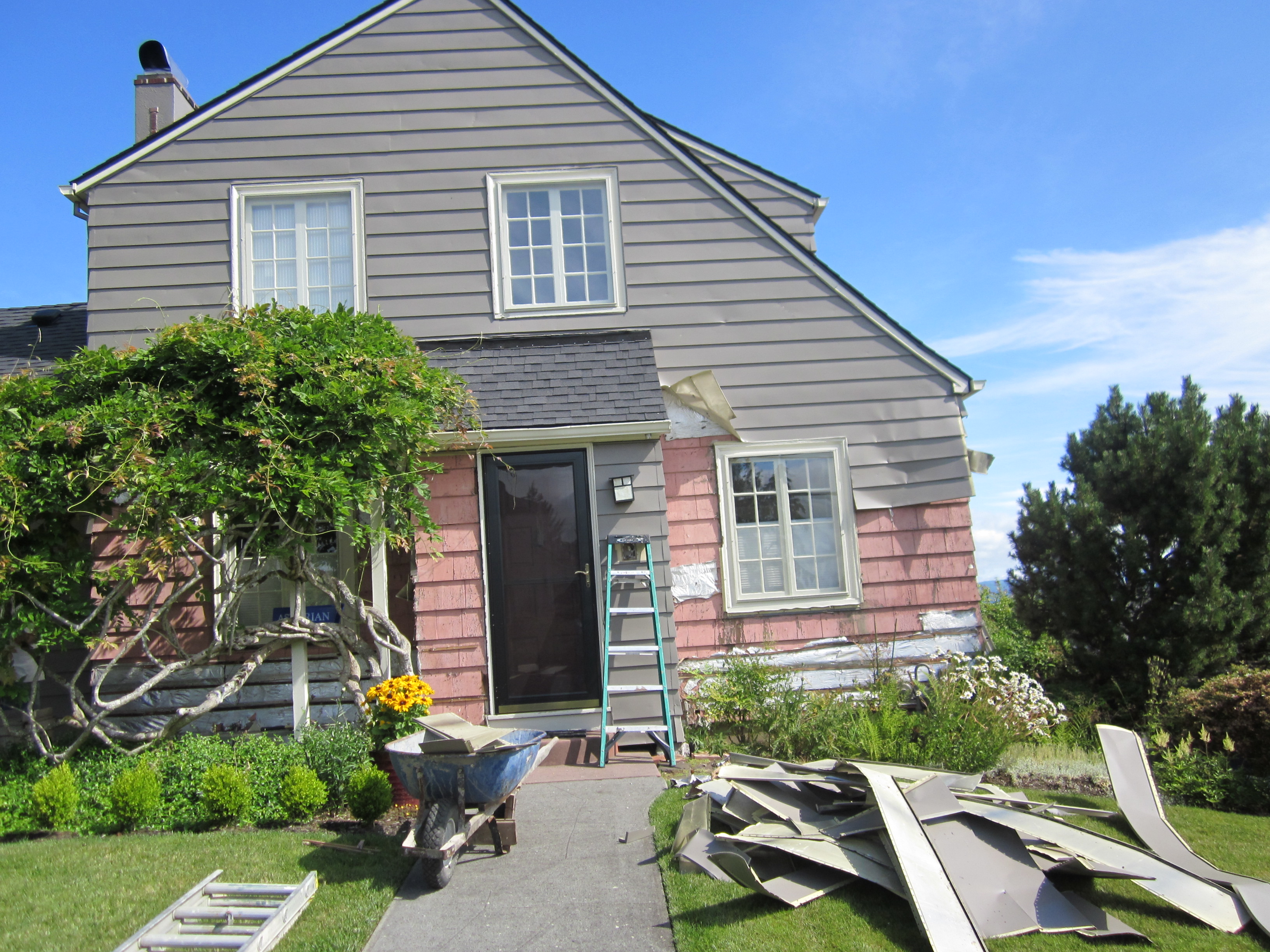
Newly re-shingled house

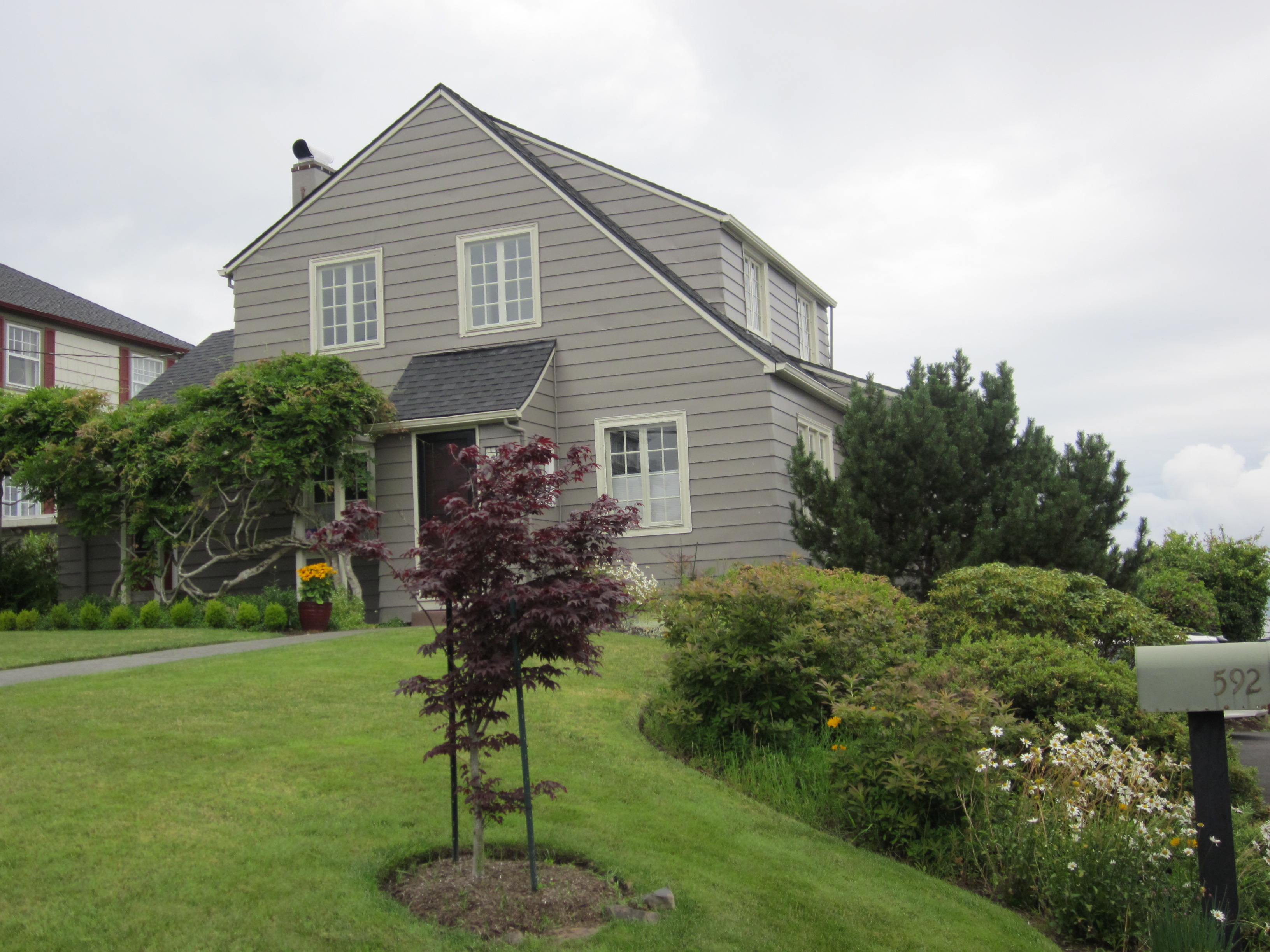
We may not be making miniatures houses any more, but we don’t seem to be able to leave this house-finishing business alone. About the time of my last post, two months ago, a swarm of ladder-and-crowbar-wielding men began tearing the dented 70’s aluminum siding off our full-size, 1928 house.

It was one of those projects that began as a repair, and burgeoned into a summer-long re-do. When we first bought the house, 11 years ago, we found a tiny picture of it with its original shingle siding at the assessor’s office, and always hoped we could restore it to that look. The aluminum siding crowded the door and window trims, and filled in most of the roof overhang, the end result being it just didn’t look the way it was meant to. A little stubby and confined in the wrong coat. We re-painted, and added shrubbery but it still looked like a mis-fit.

Aluminum comes off, Day 1

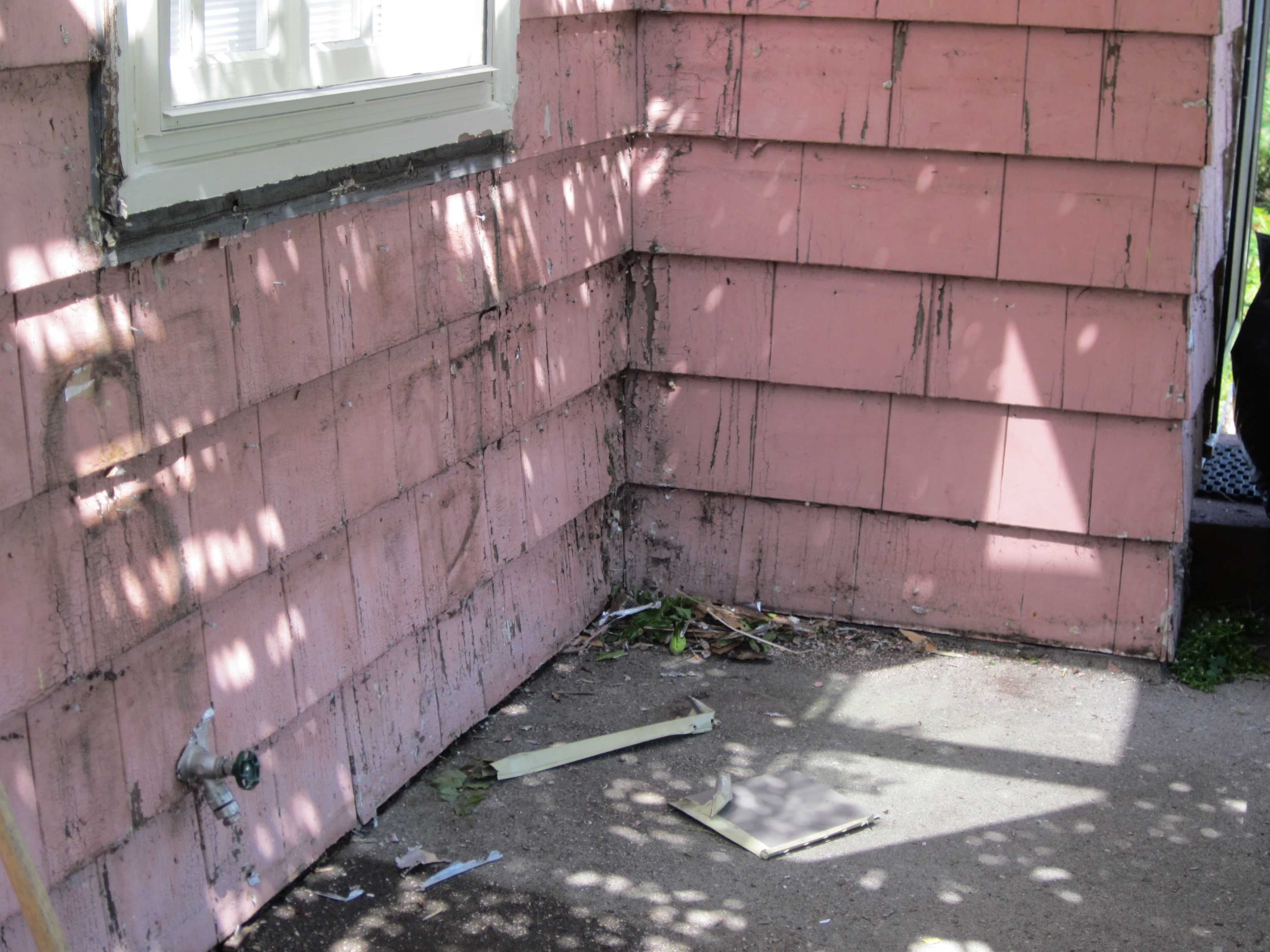
On Day One the de-constructors revealed filthy, Pepto-Bismal pink shingles under the aluminum—some areas trimmed in lavender, some in the same shade of pink, and others in chartreuse. We had heard from neighborhood old-timers about the all pink house, and found traces of it, but seeing it in its entirety was a shock. Almost embarrassing, like catching someone outside in their ancient pink nightie. Other points of interest included thousands of spider nests in the happy playground between shingles and aluminum, and surprisingly few examples of the rot we love to show on our miniatures.

Rot & spider nests

Some mystery openings appeared on the back of the house, possible remnants of a vertical pie cooler area from the original kitchen. We and the house spent that night under a blue tarp and threatening skies. Inside we were bathed in an eerie blue light.

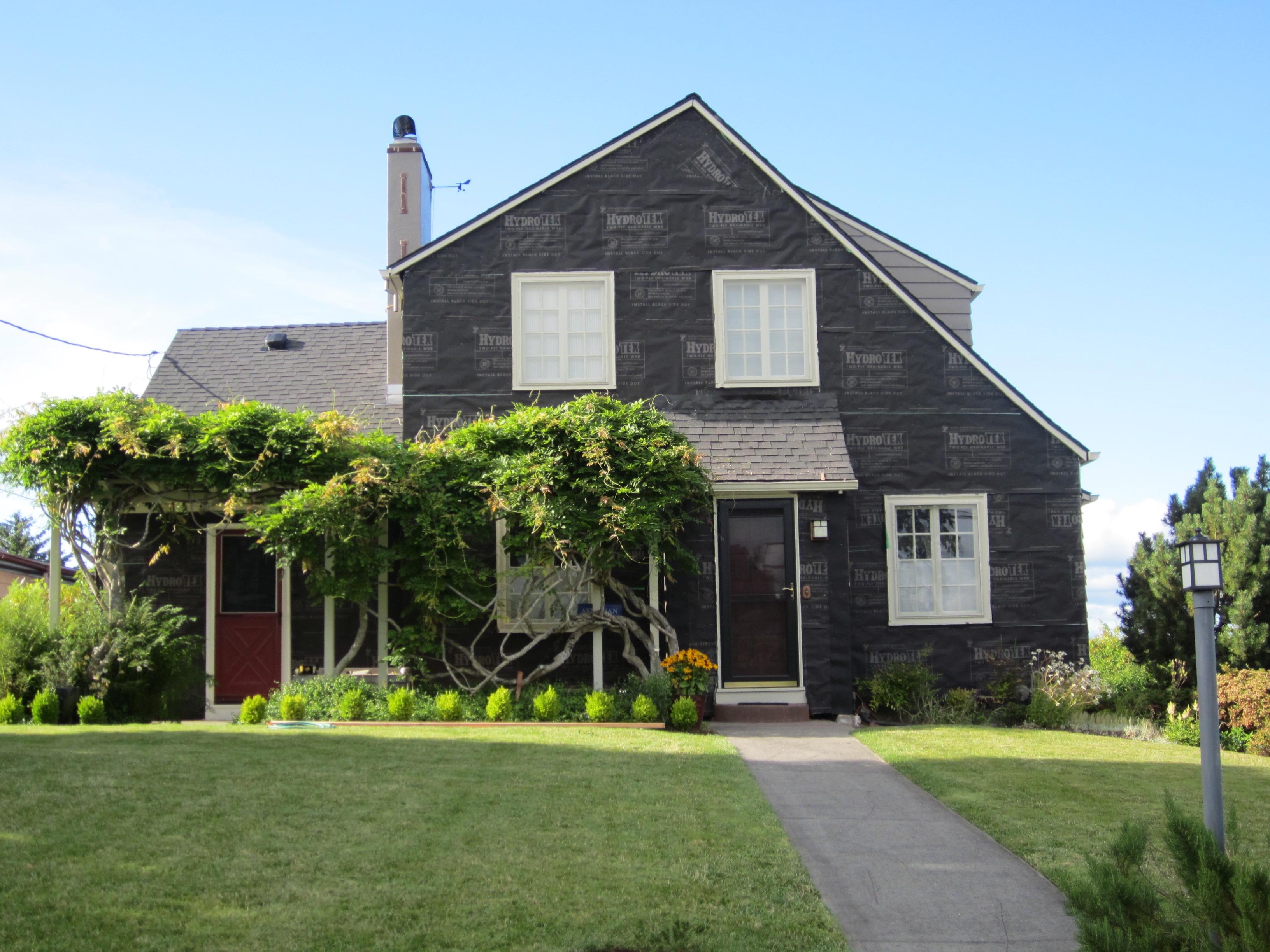
Days Two-to-Three and we went to all black—new water-barrier tarpaper where the old had been removed. There were times when men on ladders seemed to inhabit every window of the house.

View from my dining room office

Work continued on the back where there’s a downstairs bath room addition that had been built poorly, and was full of rot. The window had only been set into the frame (no wonder that room was so drafty), and not attached to the house. The workers removed the nearby downspout along with the window to clear the rot, then, at the end of the day set window back in the hole for the night. Sure enough, at 6:00 the next morning we had a gully-washer–water cascaded down the roof and downspout hole and inside the top of the window. I phoned the contractor’s phone, then Noel and I alternated trying to jury rig a garbage bag tarp to the wall on the outside, and funneling and mopping on the inside. Multiple calls to the contractor went unanswered, but at 8:30 his 9-months pregnant wife appeared with towels and profuse apologies. By then the rain had stopped, two workers had arrived with a downspout fix, and we were pretty well mopped-up.

Pink house, late on Day 1

Day One-original pink shingles

End of Day 2

Day Four dawned with a Sani-Can adorning the parking space in front of the garage, followed by the delivery of 6 ft. stacks of cedar shingle squares. The cedar smelled like campfires, and signaled the best part of the job. At this point, the house felt like one of our mini-houses—a nice clean shell awaiting its shingles. It is also when the work slowed down, as we have many more architectural ins and outs than I was ever aware of. It took one man—the master shingler–over a week just to fit the shingles around the front door extension. He had to hand-cut nearly every one, weaving the corners to keep the rain from finding a track in, just as we had done on multiple little structures. They seemed happy to have us compliment their work, but I think they thought we were a little nuts when we’d compare it to what we did in miniature. There was never even a flicker of interest in our miniature houses, they just wanted to get the job done. Day 2--black house

As you can imagine, the noise level in and around the house was anything but miniature. When they weren’t tearing things off, the workers were pounding nails in, ratcheting ladders up and down the walls, and running portable saws of varying sizes. Our days began with a trip to doggie daycare to drop off the traumatized Max, our almost-2 cockapoo. MaxNoel fled to his painting studio downtown, and I moved the laptop down to the dining room, or the furthest corner from the main racket. The neighbors went quiet, but, when asked, showed enthusiasm for the project. The workers were great about cleaning up at the end of the day, to the point of raking and sweeping up, but my evening patrols usually netted a handful of Red Bull and powdered donut empties in the shrubbery.

Day 60

By Day Sixty, the job was largely done, if not in the unrealistically estimated three weeks. Too many unpredictables. To this day, we are not quite done—still awaiting that elusive bathroom window replacement, promised, once again, for this Thursday. And a few adjustments to the downspouts, a little trim paint here and there, but by and large done. I haven’t quite become accustomed to the new look of the house—maybe it’s the orange color of new cedar, brilliant in some lights–but I do love it overall. Architecturally, it looks as it was meant to from the start, and is a much more graceful house than before. Its new skin is the right fit. Once the cedar grays down it will look more as I imagined. It is curious how it looks like something we might have built—before the Bug Juice. In all its newness, it seems to cry out for weather and age, which will come, and the Thomas trademark touch of rot, but I think we’ll skip the latter on this one.

And  yes, the contractor’s wife delivered an on-time, blooming, 10 lb. 12 oz. baby girl, her sixth child.  No wonder Daddy works so hard. The Sani-Can is gone, and while I never saw anyone enter or exit, it must have been well-used by the 12 or so men fueled solely, it seemed, by Red Bull and powdered donuts.

Coming Attractions: Next week I’ll be returning to the story of our miniature houses.

Posted in Bio | Tagged , | 7 Comments

The Bear and the Secret Room

The Bear River, 1979

The third house we completed in 1979 we called the Bear River (there are a lot of rivers in our neck of the woods, but this is one we had an up-close and personal with–blackberrying one summer’s evening on a hill above it when we noticed a namesake bear foraging on the other side of the patch.). The house was covered in grey drop siding, and featured the 3 B’s—balconies, back porch and basement, all of which made it fun for us. One day, about mid-way through, while slaving away in the studio, we got a call from the customer, asking us out for lunch. My reaction was probably stunned silence, as she lived in California, and hadn’t mentioned coming our way. Plus, who had time for lunch?  “We’re circling your house right now! We’ll land in Astoria and get a ride over. Should be there in about an hour.” That gave me an hour to tidy up ourselves and the house. The logistics of their arrival were beyond me, but all went as she had envisioned (they’d managed to talk someone wandering around the tiny airport into loaning them a car), and we celebrated at the one fancy restaurant in town. (This was the same restaurant Noel moonlighted in one summer as biscuit-maker, staff cook and dessert tester. It was there he discovered his dyslexia, while trying to pair up the number of biscuits slated for each diner with the number of people at the table—the customers and staff always came out ahead).

Faux drop siding was an exterior solution we came up with early on, as it was featured on many of the full-size houses in our area. The real thing consisted of horizontal boards tongued and grooved so that the lower edge of each board interlocks with a groove in the board immediately below it. In our version Noel cut ½”w X 1/16th thick cedar boards that I beveled the top of on the Dremel scroll saw sander. We then glued them on the 1/4″ plywood walls, with Elmer’s white glue, with the bevel at the top, and each board spaced about 1/16th” apart. A little of the plywood walls showed, but the spaces were narrow enough that the grain wasn’t obvious, especially once the house was painted. The overall look gave the illusion of the real thing, without the tedious and bulky details of tongue and groove. That’s what so great about houses compared to, say furnishings—there’s so much detail on a house that no one holds the “cheats” against you.

Bear River back porch

The back porch was an “add-on,” so the siding was the less expensive board and batten—3/16 battens glued to the ply walls, with some decorative shapes and chevrons to fancy it up. Inside was a trapdoor down to the basement, with ladder-type stars and shelving made from our termite wood, a cracked cement floor and brick walls. There’s an opening under the porch for viewing the basement. The house also contains a small, secret room, behind a movable panel, as do many of our houses, but we’ve mostly forgotten which ones. The only reason I remember this had one is because the owner called about 6 months later, late at night, to say she’d just found it. We loved that it had taken her so long.

Bear River basement

Posted in Houses, Miniatures | Tagged , , , , , , , , | 5 Comments

A Brick in Time

Port Townsend split flu chimney, 1981

Last week the Den Mother of THE CAMP (the irrepressible miniatures chat group found at THECAMP@Yahoogroups.com) asked if I’d ever written about our bricks. While giving her the short answer, I remembered a brick story from the 80’s.

One of the great things about building miniature Victorian houses in the 70’s and 80’s was the plethora of full-scale magazines on the subject, supplying us with quirky detail ideas. When we found an article on split-flu chimneys, perhaps in 19th Century Magazine, we couldn’t resist. The chimney began as a single flu, then split above the fireplace so that in the daytime, one could enjoy the light coming through a stained glass window over the fireplace, between the flus. The split flu then rejoined itself over the window and on up through the house. So we went to work installing one in the Port Townsend house, (see it live at the Kansas City Toy and Miniatures museum). There was a catch though, it had to work. I wanted to build it so we could burn incense logs in the fireplace and have it draft up the chimney, not leak through hidden gaps in the sides. We must have gone through a half a box of logs before we were able to seal up all the leaks, but eventually it worked. When we exhibited it at a 1981 NAME Houseparty, the security guard was so intrigued he kept the fire burning for us so everyone could enjoy the smoke curling out of the chimney top.

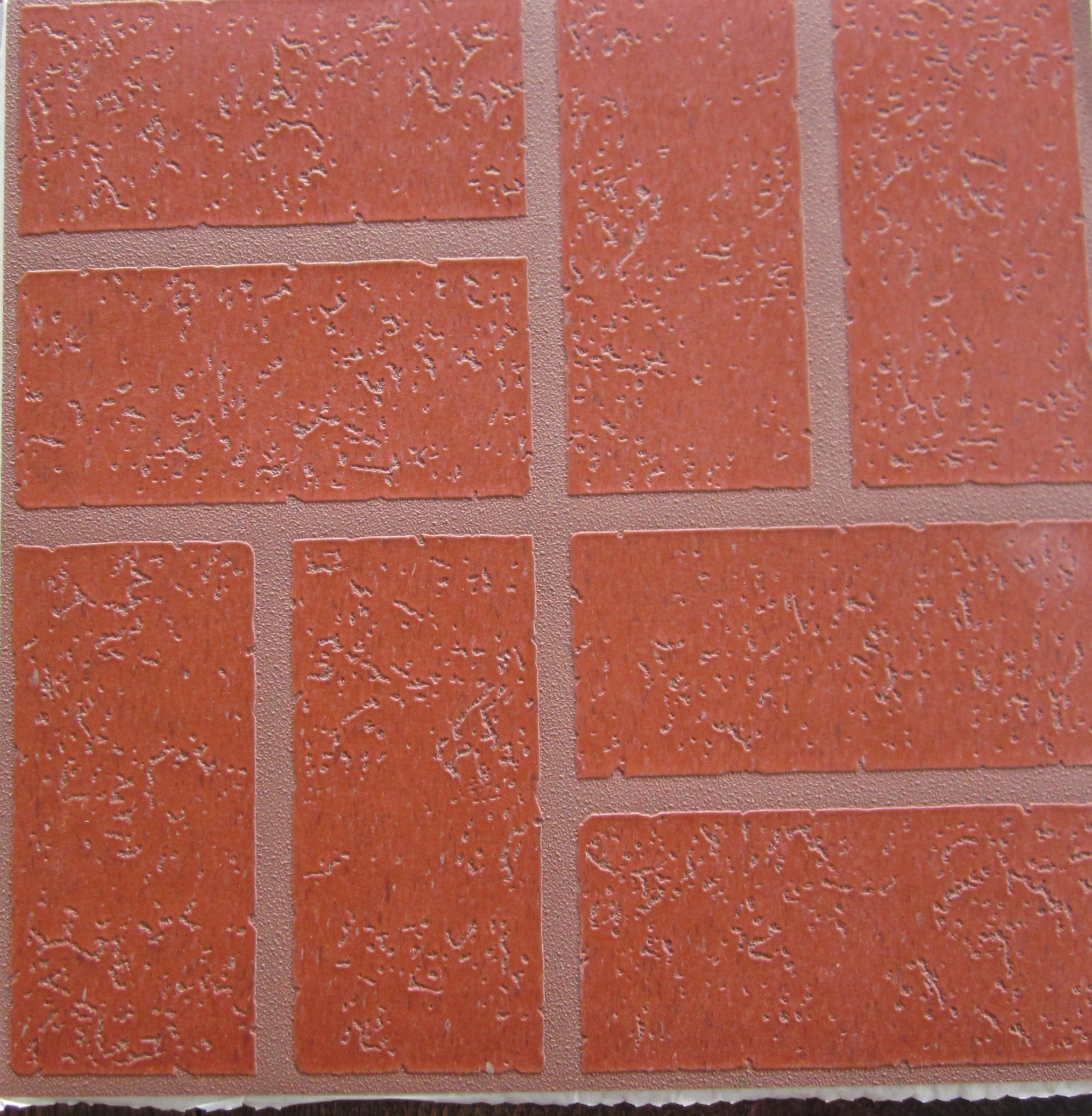
Original 1' sq. floor tile

As for Den Mother’s question, I’m pretty sure I didn’t write about the bricks because the source material—Armstrong vinyl floor tile–disappeared from the world before I began writing about our work. I did, however, write about a good way to make similar bricks out of Fimo in an article posted on our website www.thomasopenhouse.com under “Tips.” And, there are a lot of brick options out there now which you might be able to adapt to look like ours. I recommend a thickness of 1/16”, as they are easy to work with and won’t “bulk up” your project the way thicker bricks do.

The tiles we used were the old six-brick-to-a square pattern I remember seeing on kitchen floors in the 60’s. They were later replaced by an “improved” version, no longer vinyl, with a magnified texture, and coated in a thick no-wax plastic finish. Besides the awful finish, the new brick grain was out of proportion for miniature use. They went from something closely resembling brick to over-scale faux-brick. Before the good ones were phased out we bought 8 or 9 boxes of 40 tiles each (or 40 sq. feet per box). They joined the racks of rotting wood stored in our garage for future use. And that was the easy part.

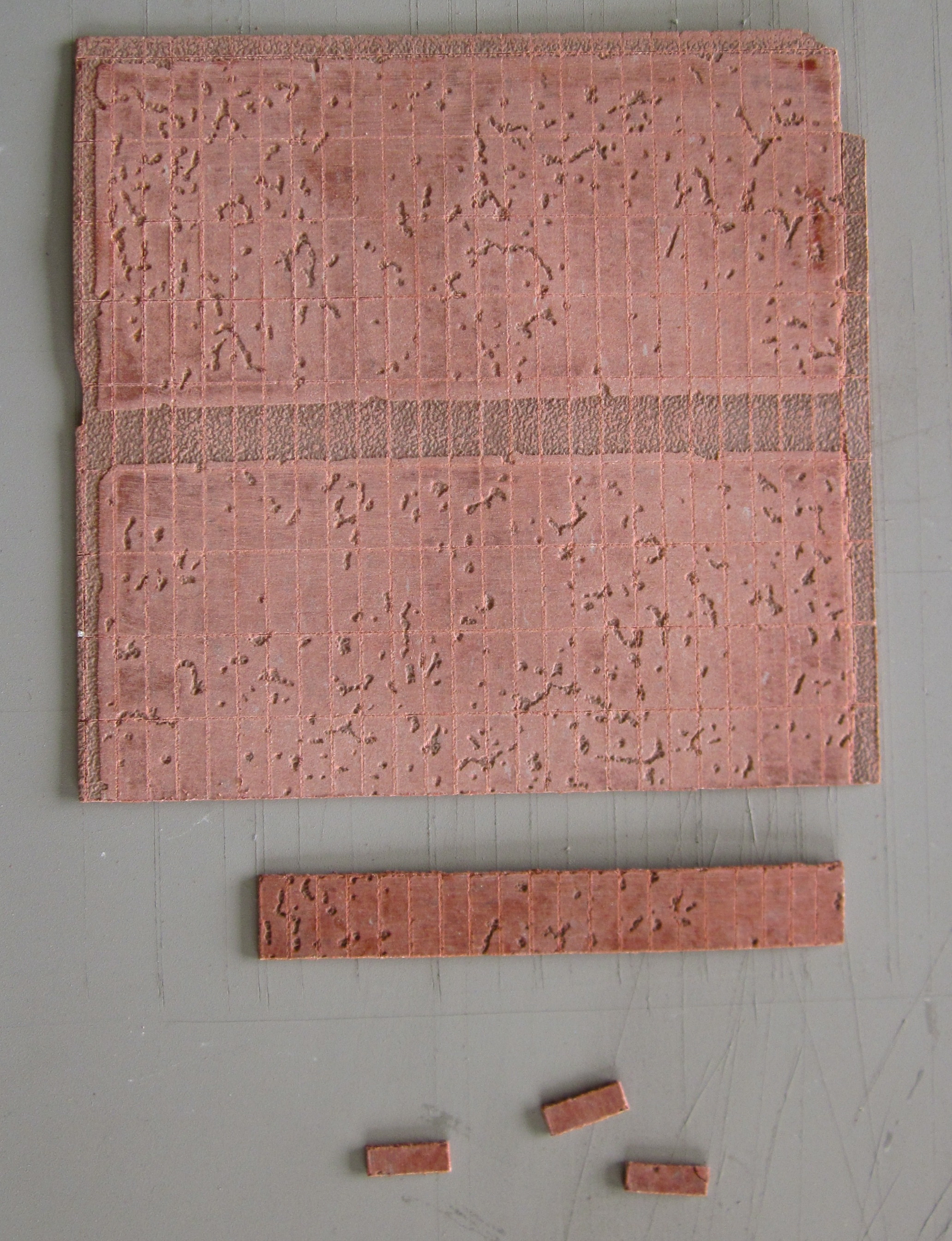
Sanded and scored tile.

Preparation of the floor tiles was laborious and dangerous. First the sticky backing had to be removed because it balled up when cut into mini bricks, and prevented them from lying flat. Noel scrubbed the adhesive off with gasoline, then left the tiles outside to air out until the gas evaporated. That took a 5-7 days. Step Two was sanding the gloss off the front of the tile, face-mask in place. In Step Three we scored each tile into mini bricks 3/16” X5/8” using an Exacto.

From there we broke them into strips, then individual bricks as we worked, gluing them on with Elmer’s white glue. If the courses traveled around corners, as in chimneys, we overlapped shorter “end” bricks with full bricks so the edges met smoothly, and the rows alternated as in the big world.

Chimney Bricking in Progress

We left somewhere between 1/32- 1/16” of free space around each brick for grout. Once the glue dried we added some age by carving the edges of the bricks with an Exacto, and smoothed the corners (for chimneys) with a sanding block, pressing together the edges. For grout we used Quick-Plug cement (from the hardware store), mixed with a little cement adhesive (same department of the hardware store), and a little Dirty Water Wash (Mars Black and Raw Umber tube acrylic paint, and enough water to make a transparent muddy wash) to slightly darken the cement. That was all mixed with enough water to make a cement slurry that could be scrubbed into the brick with a foam brush.

Grouting Brick

When the cement was nearly dry, we sponged the excess off the face of the bricks, and enough into the grout lines so they were slightly scooped, rather than flush with the face. The final steps included streaking them with more Dirty Water Wash some sap green tube watercolor for moss, and Mars Black right from the tube to make the soot at the top.

Use your eyes. Look at real chimneys and what surrounds them (reason enough for a trip to Paris or Prague–their rooftops are the best!). It’s one of those areas where one can play with the subtleties of paint and aging effects, creating yet another element of that elusive illusion of reality.


Chimney top blackened with Mars Black "soot"

Posted in Miniatures | Tagged , , , , , , | 16 Comments

When What’s Old Was New

Number 20, our second house of 1979, was a project of another sort—the customers specifically asked for less aging. At the time, the idea of aged miniatures was still new. The buyers wanted to display the house in their miniature shop, and held the notion that their customers might be repelled by the presence of dirt, bird poo and dry rot. In retrospect this seems like antiquated thinking, considering the number of houses collected and classes taken due, in large part to our aging and distressing techniques, not to mention the gallons of our Bug Juice aging solution the shop sold, but the customer is always right, so we went to work on cleaning up our act for The Gray’s River.

Gray's River porch detail, 1979

Another incongruity in their request lies in the name, though I don’t think we planned it that way. Gray’s River, WA is a small, rural town, featuring a gracefully aging Victorian farmhouse overlooking an even more aged covered wooden bridge, both of which helped inspire our efforts to highlight the effects of time and weather on old structures. Our structures were not neglected, or tumble-down houses, but reflected the natural ravages of time, while being maintained and repaired along the way. Slope slant and sag is what gives them their stories, reminding the viewer of an old house in the town where they grew up, or their grandparents lived in. Age is familiar, immediately and involuntarily involving the observer. It is part of what we like to call the illusion of reality.

The Gray's River, 1979

The Gray’s River also became the basis for the design of our Tower House shell, one of the series of unfinished shells (or kit houses) we designed for do-it-yourself-ers. These were built for us by Ray Urh, who adapted the design to fit efficiently on 4′ X 8′ ply, and take standard manufactured doors, windows, and etc. They were distributed through Mr. Peepers Miniatures in Seattle. Early on, we had learned that the kit business took too much time away from our finished work. A local woodworker was eager to build the shells, which we then packed for shipping in re-built washing machine cartons. While we knew enough to design houses to fit through our narrow doors, we neglected to remember that the boxes would make them bulkier. I packed them in the living room, by the front door, paring down the boxes as much as possible. It was Noel’s job to get them out the door, one way or another, until the day one wouldn’t. No amount of pushing, pulling or shoving would pop it through. Noel was feeling irresistibly Gonzo that day and made a run at it from the dining room, through the living room and into the air until shoulder met box, the immovable object. After that we were thrilled to pay someone else to deal with the kits, and that Noel still had a shoulder.

The Gray’s River is now owned privately, but it may be for sale. Please let me know if you’re interested. Unfortunately the best pictures of it have been lost, but these few show the basics. Time has aged the photos probably less kindly than the house itself.

Posted in Houses, Miniatures | Tagged , , , | 9 Comments

Dirty Little Secrets

Cathlamet Side View

In 1979 the world tilted in our favor–Mork & Mindy came on the air, and Suzanne, a new customer, asked for an aged house. Not just a hint of age, but old. “Show all the bumps and wrinkles, I love them! And dirt is good!” Until this time we had added a few drips under the window ledges and down the chimney, broken out some lattice under the porch for where the dog found shade in summer, but it was all pretty subtle. We knew it was there, and our customers thought what they saw was charming, but no one actually asked for age. And, being dependent on our customers and reputation, we didn’t dare push the envelope too far. Wow! What a thrill it was to go ahead with what we’d been dying to do all along!

The Cathlamet is named after a small town up the Columbia, where Victorians perch on a hillside above the river. Right off, this gave us license to design a house built into the side of a hill, then pull it away to show all the dirt, along with giving us room for a sizable basement garage. And we could include a full, dusty attic, like the one in the 200-yr.-old Massachusetts farmhouse I grew up in, and the one we played in at my grandparents. It was hard to know where to start, or stop, but Noel managed to launch a house with nearly every latent desire our grungy little hearts had been harboring. I was especially thrilled to know we would finally use some of the termite wood stored in the garage.

Cathlamet Garage/Basement

The termite wood came from one of our foraging (aka “midnight dollhouse supply”) expeditions. Cruising down the back road one day, Noel and his partner-in-crime, Rocky, “noticed” what looked like a pile of de-laminating plywood in a field. When I got home from work Noel poured me a glass of wine, gave me about 10 minutes, then said, “Let’s go, I’ve got something to show you. Oh, and you might want to change into something old, and wear your clam-digging boots. And gloves.”

The pile was a ways off the road and so old, rotten and overgrown with blackberries I can’t imagine they really “noticed” this without some serious exploration. It took some doing to pry up the top sheet, which was more a crumbling mass of rot than anything identifiable as wood. The next few sheets came off in strips. And then the bugs began to scatter. Not just bugs, but termites. And the smell was like the breath of Godzilla—beyond putrid. No way was this coming back to our house. “It’s gonna be great!” Noel insisted, “You’ll see!”

Cathlamet Exterior Aging

It’s no spoiler to say I was overruled, and helped pack sheet after sheet of rotting 4′ X 8′ veneer into the van, much to the delight of Sunshine, our yellow Lab. While everyone else was enjoying an evening of the new game Trivial Pursuit, we were on the lawn scrubbing termite nests out of rotten wood. I hosed while Noel went to work with a heavy wire brush. Each morning we would turn it, hose and brush some more. I tried not to think about where the termites were seeking shelter. Eventually the fine-grained wood dried enough (and, I had to admit, silvered quite nicely), to be stored in jury-rigged racks Noel built into the garage ceiling, and waited for its time. With the help of Suzanne, and a few “Nanu-Nanu’s” spoken by our favorite Orkian, Robin Williams, we were able to put the termite wood to work.

Posted in Houses, Miniatures | Tagged , , , , , | 1 Comment

To and from The Tool Pool: Our Gold Watch

The Goodbye Brick

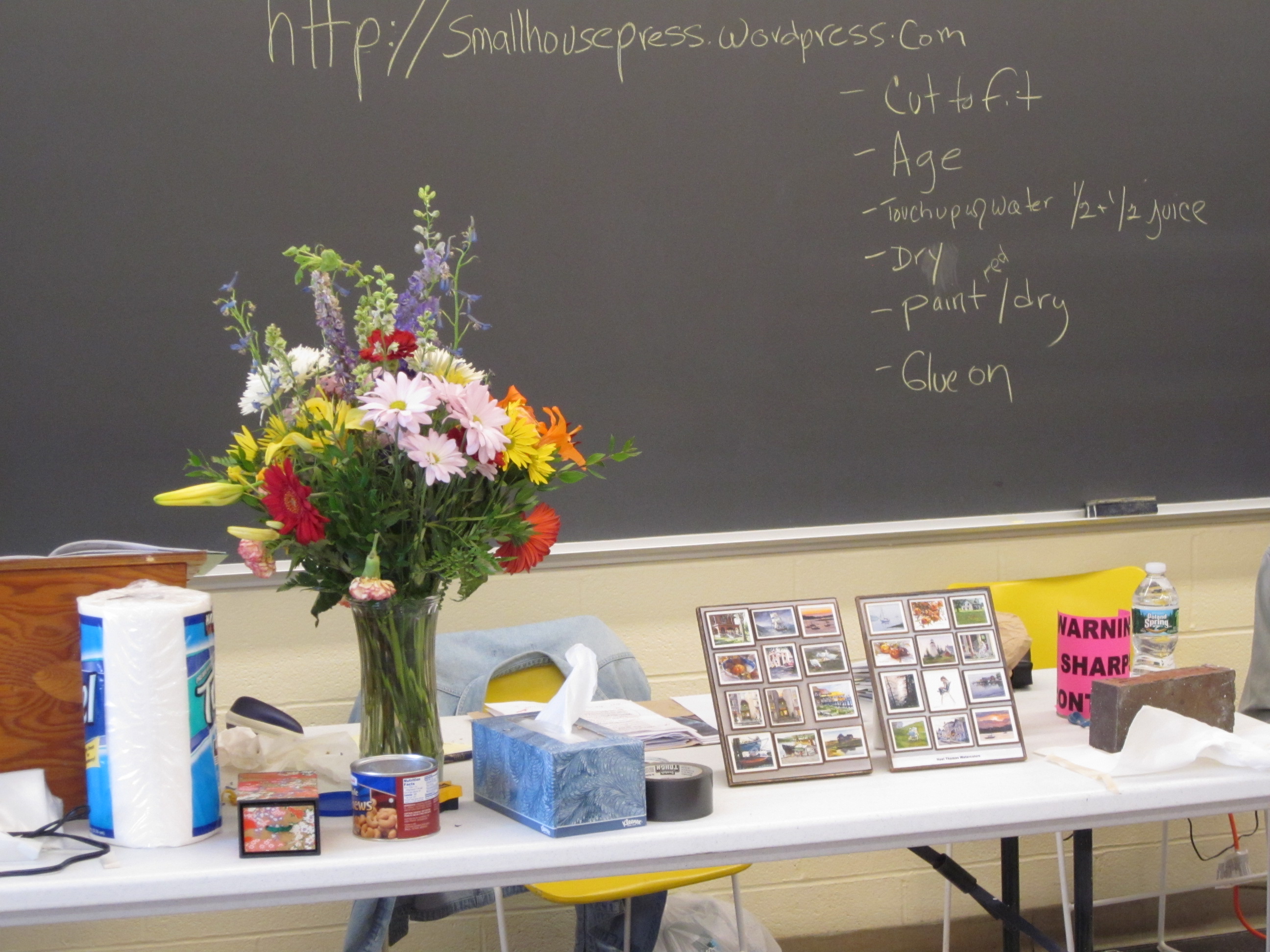
Noel and I just returned from 15 days and our last teach-a-thon at The Guild School in Castine, Me, and our last class ever. The School and Castine were their usual lovely selves and difficult to say goodbye to. I am hoping some of you will email me photos for future postings about the school. We thank everyone in attendance for their good wishes, the wonderful flowers that graced our as-always messy classroom, the keepsake album, and best of all, our very own brick, signed in gold by the ever-ready Tool Pool! Special thanks go to Pete and Pam Boorum for packing and shipping up both the album and The Brick. We are in your debt…

Flowers in the classroom

The Tool Pool (currently composed of the Boorums, Dick & Carol Hardy, and Elizabeth Gazmuri) is a stellar group that purchases, repairs, oversees and stores untold numbers of tools and appliances for the Guild classrooms—metal and woodworking lathes, shapers, planers, drills, kilns, dryers, etc., along with the accompanying heavy-duty orange extension cords, clamps, chucks, bits and plastic buckets. They’re a volunteer staff who make sure everything is tip-top and delivered to the right classrooms each June. And each June they present, in vain, an amusing little skit for the faculty on how to re-coil the heavy-duty orange extension cords so that they aren’t in a snarl for next year. Then they stay after school to pack it all up, re-coil the extension cords and run inventory. In the dead of winter they return to Maine for cleaning, repairs, replacements and to make sure the Academy hasn’t stashed them somewhere where they won’t be found again in June. And all this is in addition to their duties as teachers and students.

Midnight Brick Supply: Maine Maritime Student Center

The Brick was one of 12 we used as classroom weights and props for most of our twenty-eight years at the school. They also happened to be borrowed from an Academy (Maine Maritime, where the school takes place) building project, as replacements for the rocks we’d formerly gathered from a nearby beach and returned at the end of each school session. When we decided to box and store them, the bricks became bones of contention with a few individuals in charge (present leadership not included), not to mention The Tool Pool, charged with hauling them around for us. Once we proved they were actual tools–necessary for our students–the irritation turned to good-natured (we imagine) ribbing as to the primitive nature of our “tools.” Nonetheless, they remained gritty, scruffy, duct-tape-wrapped boxes of dead weight. But, hey, who’s to say a brick is lower in stature than a toaster oven? Or a heavy-duty orange extension cord.

The brick now joins other more glamorous awards and acknowledgements on our mantel, and we send special thanks to all of you who have toiled for so many years to keep us in bricks, buckets and band-aids. Considering that someone paid $90.00 for one of the bricks at auction, we know how highly you value us…

Posted in Bio, Miniatures, People | Tagged , , , , , | 1 Comment